There’s something so refreshing and consuming about staying at home on a hot summer day. Losing sense of time yet drowning in it. Cut off from your usual Starbucks refresher, here’s a soothing beverage so the only cool and tall thing that’s sweating is your glass.
Suan mei tang 酸梅汤, which directly translates to sour plum drink, has found its place by the emperor’s lawn chair and the community poolside. According to traditional Chinese medicine, its ingredients – hibiscus, orange peel, plum, licorice roots, and most notably, hawthorn – cleanse and calm your internal system, expelling heat and quenching thirst. On those hot summer nights in China, when even the bamboo-straw fans can’t cool you down,hawthorne is sure to be brewing its aroma on the kitchen stovetop. In the winter, suan mei tang makes an appearance accompanying hot or spicy meals.
Ingredients:
Dried Hibiscus Roselle 25g
Dried hawthorn 120g
Dried plum 50g
Dried Licorice roots 5g
Rock candy 100 g
Dried orange peel 20g
Water 17 cups (4,000 cc)
Dried Osmanthus flower 1 tsp (optional)
Instructions
1. Rinse hibiscus roselle, hawthorn, and licorice with tap water. Don’t let them sit, as their aromas will seep into the wash water rather than the pot.
2. Soak hibiscus roselle, hawthorn, plum, and licorice in a big pot with 17 cups of water for 30 minutes. Put in the rock candy. Then, bring them to a boil.
3. On medium low flame, simmer it for 30 minutes
4. Throw in the orange peels, simmer for 3 extra minutes. Overcooking orange peel may result bitter taste.
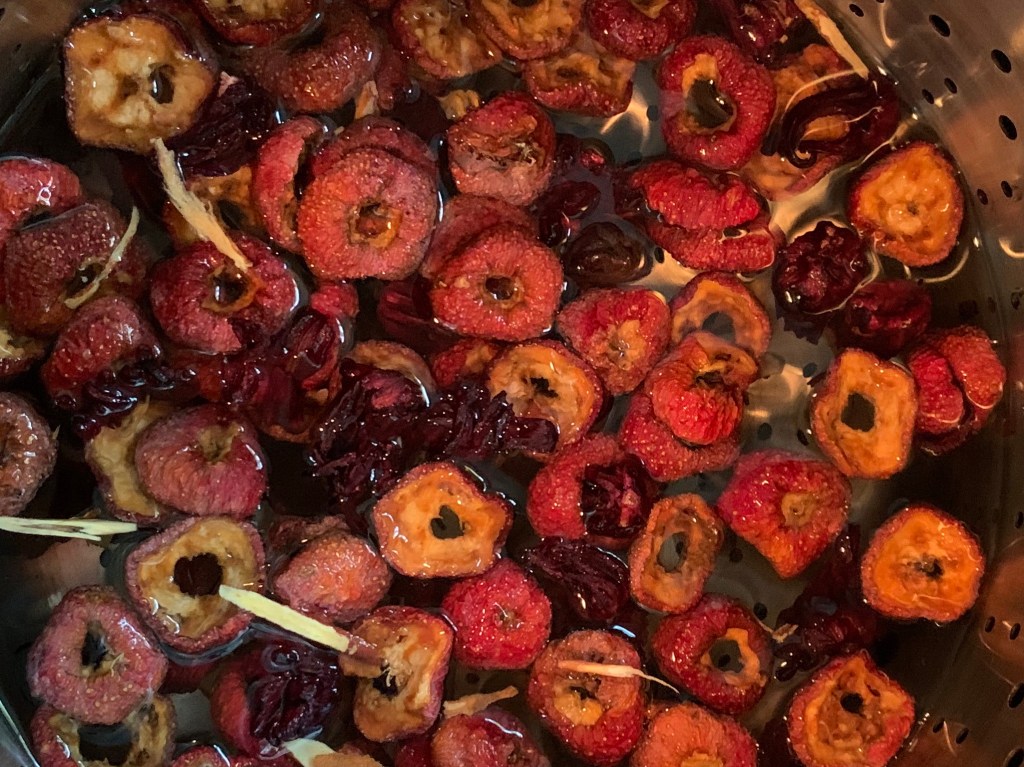
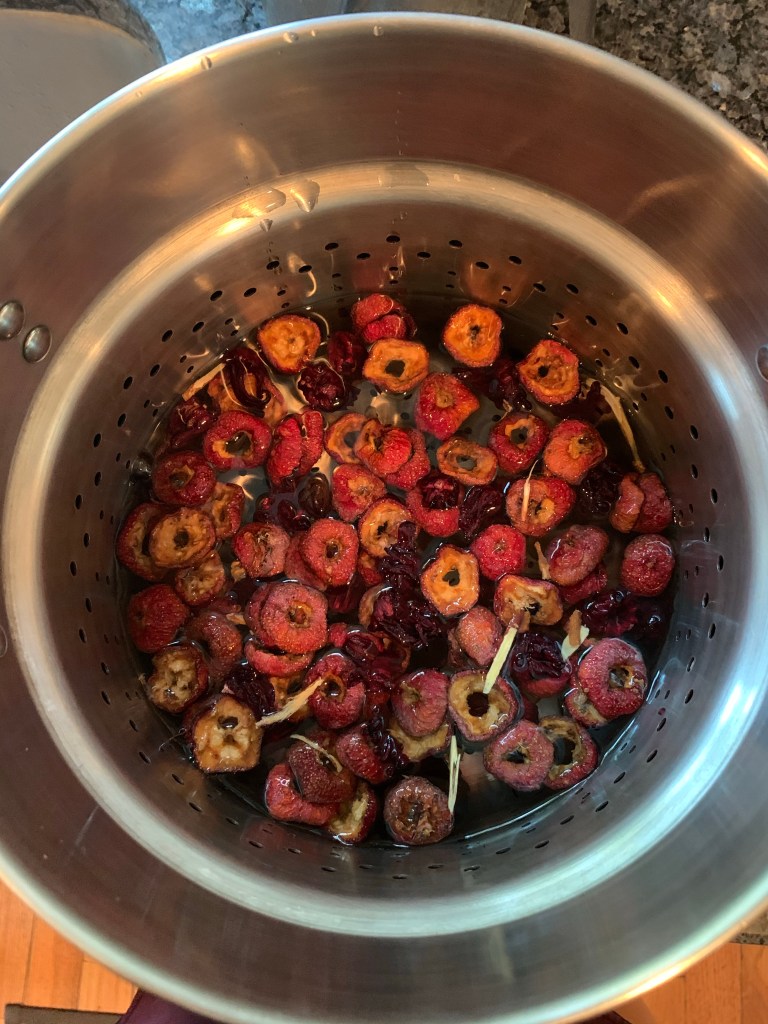
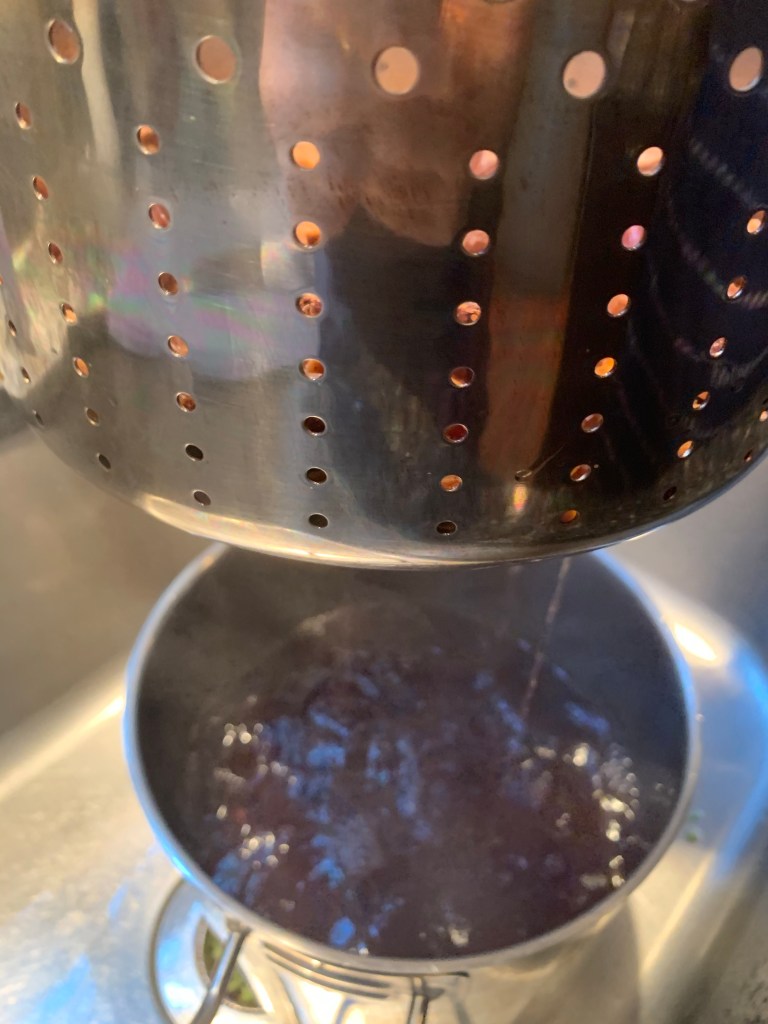
5. Turn off the flame. Pour it through a sieve to parse out the solid materials— either toss or refrigerate them as a snack. I recommend the latter.
6. Set aside the liquid drink to cool in the refrigerator to chill.
I sprinkled on a bit of osmanthus, which is traditionally enjoyed during the Mid-Autumn Festival in celebration of reunion. I hope in most states, lockdowns have been lifted and all extended family and friends can unite over one table— six feet apart.
One of Qingming Festival’s most prized culinary traditions is that of cold foods, requiring households to eat only foods prepared before the festive period…and forcing pastry chefs to become innovative in their desserts. Because the texture and taste of the dessert had to sustain through temperature changes, chefs turned to buns. Though cleverly designed, buns mark the simple, from-scratch nature of Chinese holiday desserts.
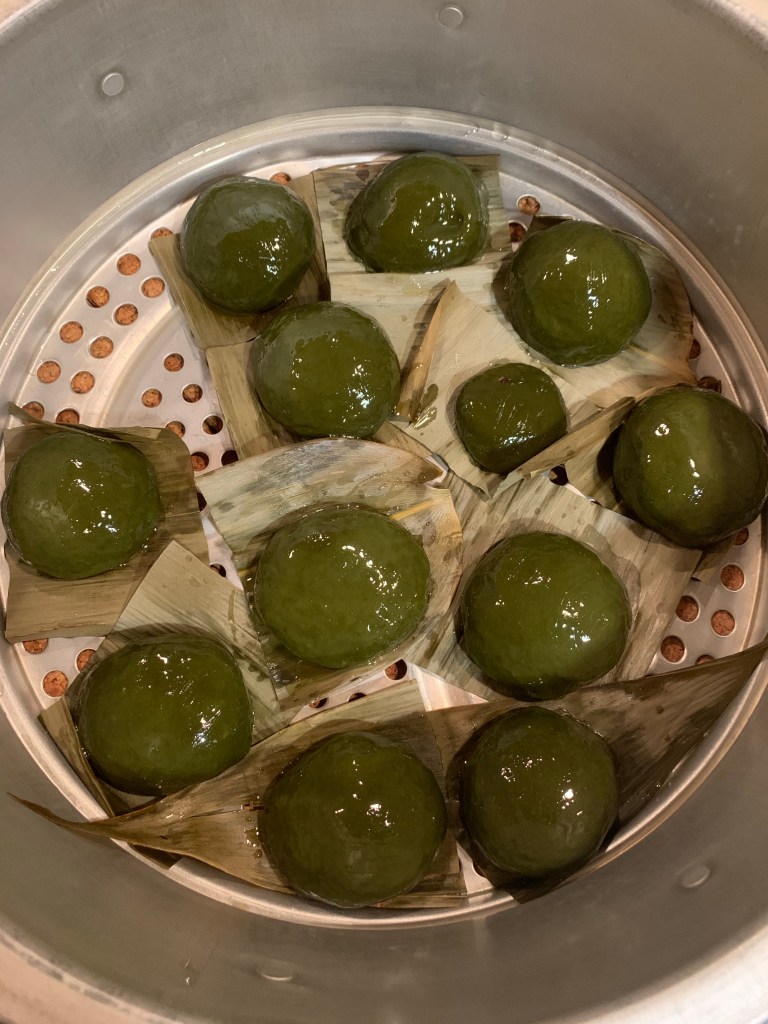
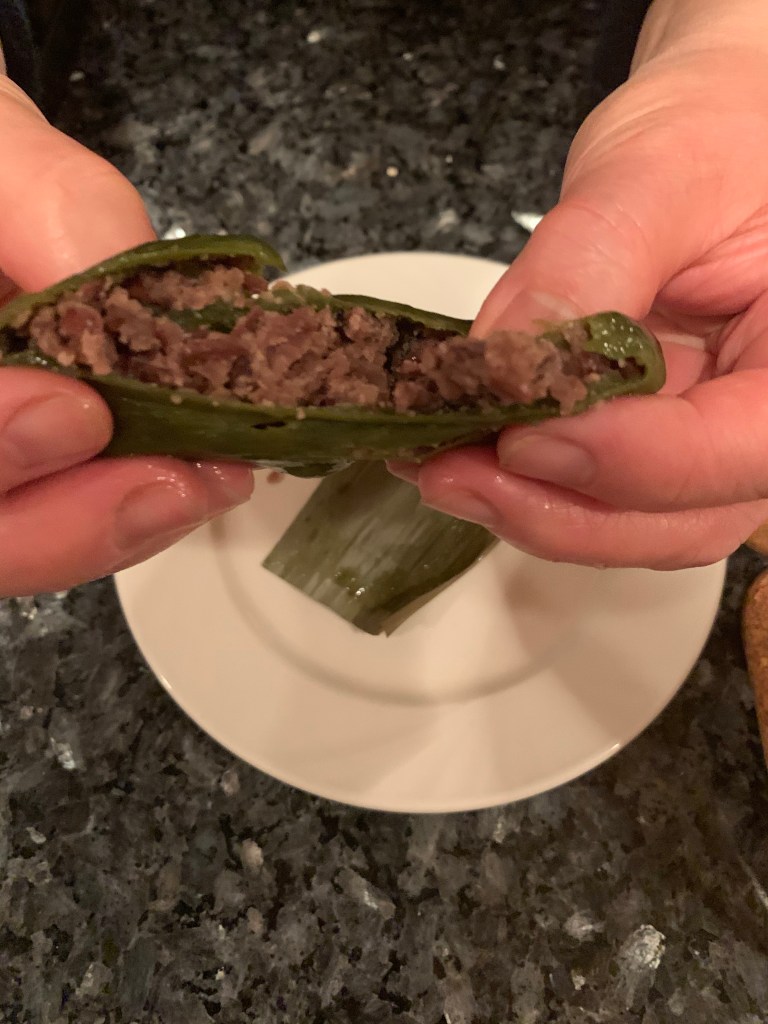
South of the Yangtze River, in the Zhejiang province浙江, in Fuzhou福州 and in Chaoshan 潮汕, steamed green buns, also known as Qingming Buns, are snacked on customarily during the festival. Sizes, shapes, and fillings vary: massive or minute, ball or dumpling, sweet, with red bean paste or dates, or savory, such as turnip with bamboo shoots, sausage with mustard greens, or bean curd with chive. The flour wraps are mixed with wild potherb greens like wheat straw, cudweed, or mugwood, the most common wild species Chinese handpick. Steamers line with bamboo leaves so the heat rises through the layers, while the fragrance from the leaves infuses the dough and gently cooks the buns.
Amidst the various sizes, shapes, and fillings, Qingming buns all wear the same green hue, esteemed for deep symbolism. Green symbolizes nature, cultivation and the arrival of Spring, alongside harmonious growth and prosperity.
Ingredients:
1 can of Red beans paste
Glutinous rice flour 130 grams (g.)
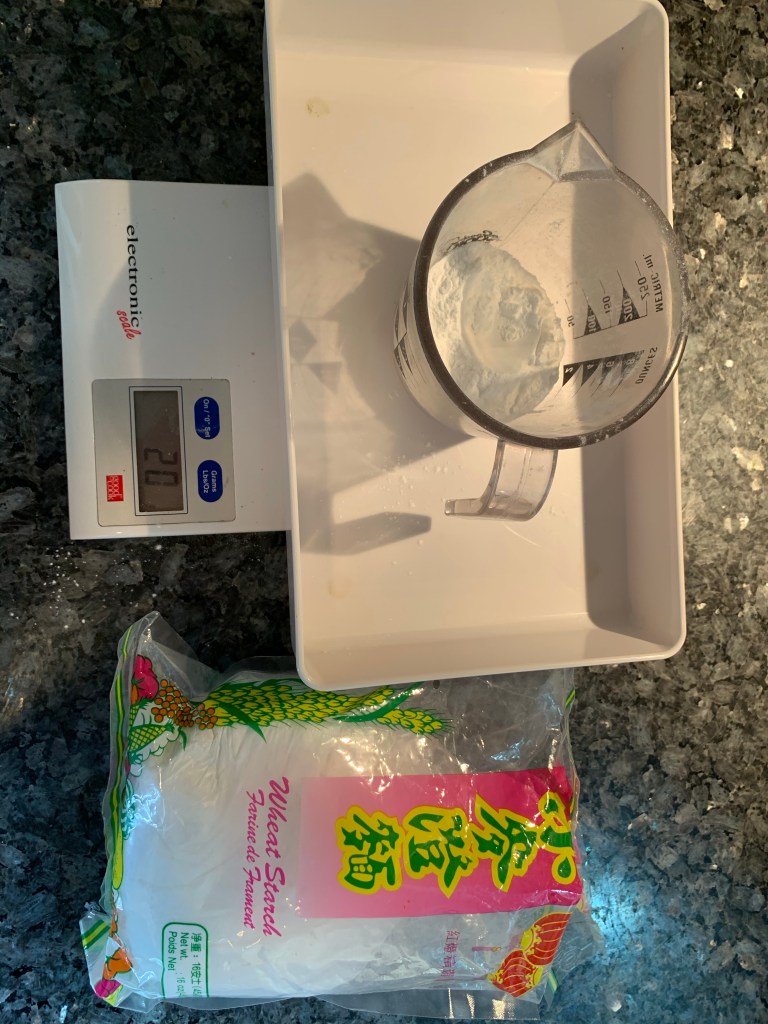
Wheat starch 20 g.
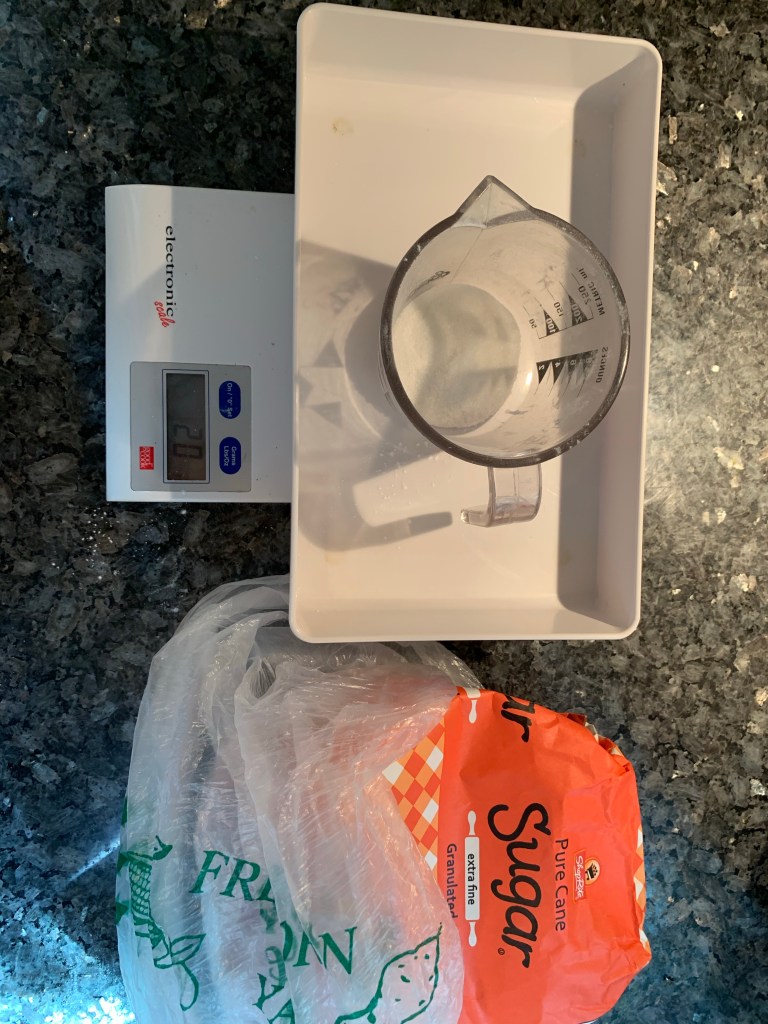
Sugar 20 g.
Wheat grass powder 20 g.
Water 100 g. (to be added to Wheat grass powder)
Water 30 g. (to be added to the dough to adjust its softness)
Coconut oil 10 g. (melted for the dough)
Water 4 cups (for boiling the dough)
Coconut oil 5 g. (melted for brushing at the end)
Directions
Transfer the red bean paste from the can to a bowl. Let it sit in the refrigerator over night, uncovered, which will get rid of some extra moisture in the paste.
Measure 20 g. of red bean paste and form it into a ball shape with your palm. Repeat for a total of 8 balls. Keep them in the fridge for later.
Boil the four cups of water.
Mix glutinous rice flour, wheat starch, sugar, coconut oil in a big bowl.
Make the green paste: combine Wheat grass powder with 100 g. water, mix well.
Add the water and the green paste into the big bowl of rice flour, wheat starch, sugar, and coconut oil, using a rubber spatula to mix until you don’t see dry powder. The dough should begin to feel bit hard, and mixing should be difficult at first.
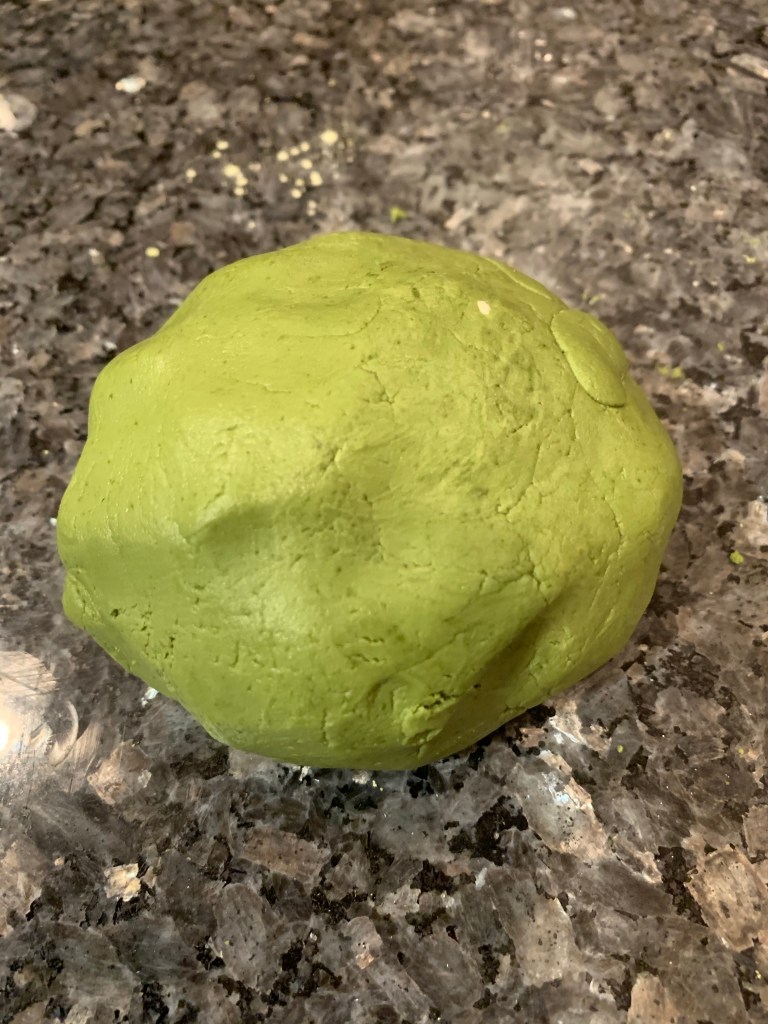
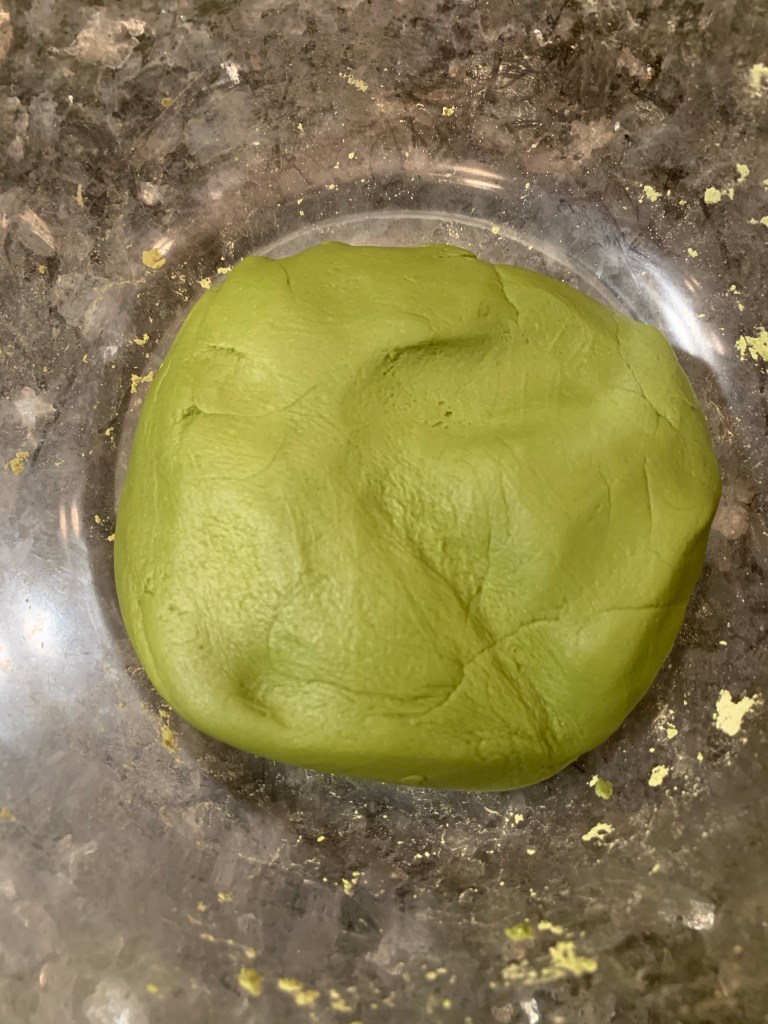
Once the all water and green paste have been added, your hands are going in to knead. If the dough is too dry, add a little water to it, but only add one teaspoon at a time; if the dough is too wet, add little glutenous rice flour. The dough should come together in a sticky but solid texture. Don’t worry if the color has not been 100% incorporated, or if the texture is not to perfection.
Move the dough to a flat surface. Continue to knead it until all the green color is even throughout the dough. We want the dough to be able to form into a ball but still be able to break apart when pressed.
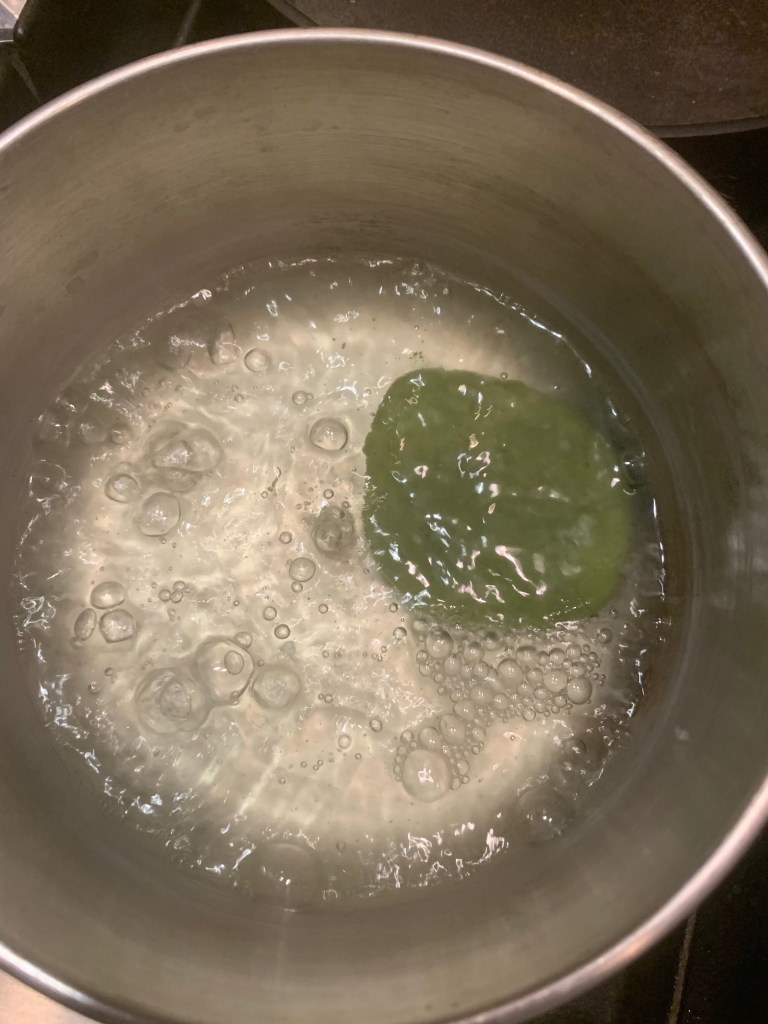
Take 20 g. of the raw dough, form a ball, then with your palms, press it flat like a disk. Cook it in the pot with boiling water, turn the flame to medium. First, the dough disk will sink to the bottom, but make sure it does not stick to the bottom by consistently stirring. Eventually, the dough disk floats up, signifying that it is cooked.
Remove the disk and drain the excess water. Let it cool but allow the dough to retain enough warmth for elasticity.
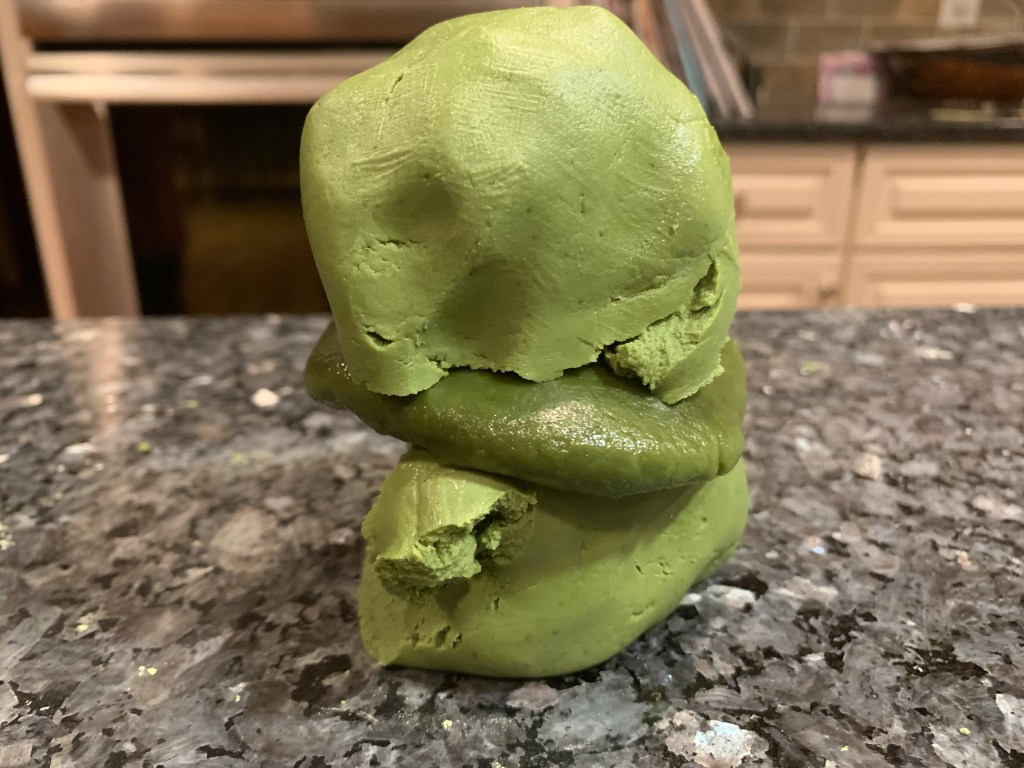
Split the rest of the raw dough into two balls, and sandwich the cooked dough disk between the two. Knead the cooked and raw dough together, and the conglomerate should become softer. To test its elasticity, pull the dough apart: good dough should easily expand.
Knead the dough into a log, separating it into 8 even portions and forming each into ball shape.
Take out the red bean balls from the fridge.
Take a green ball and form it into a tea cup shape. (See visuals below). Place the red bean ball into the “tea cup”. Wrap it around, seal, and pinch out the extra dough. Roll it into a ball with your palms.
Repeat for all 8 of the dumplings.
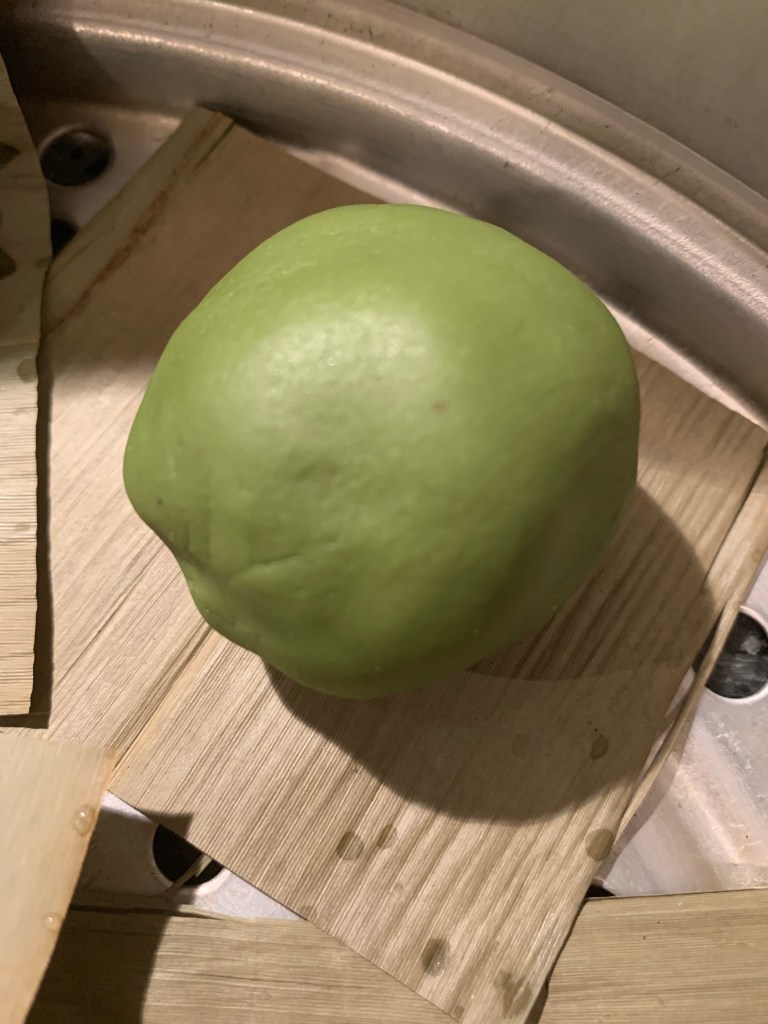
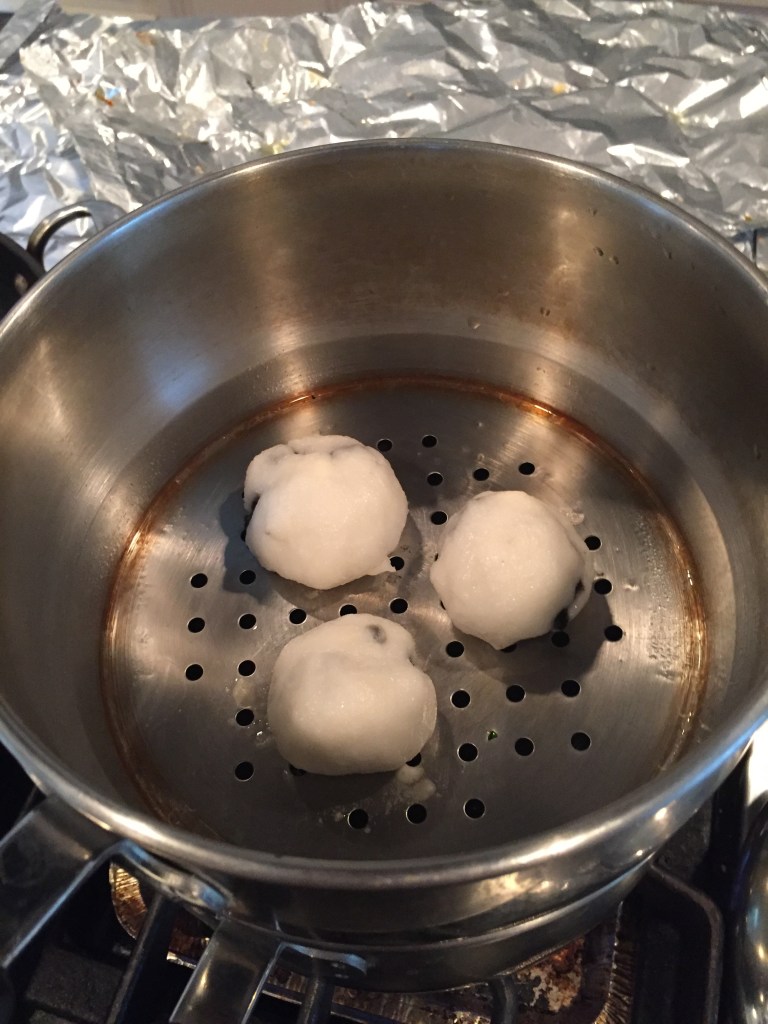
Place each onto a greased steamer. Steam for 10 minutes on a medium high flame. Tip: when you open the steamer cover, avoid dripping water onto the green balls.
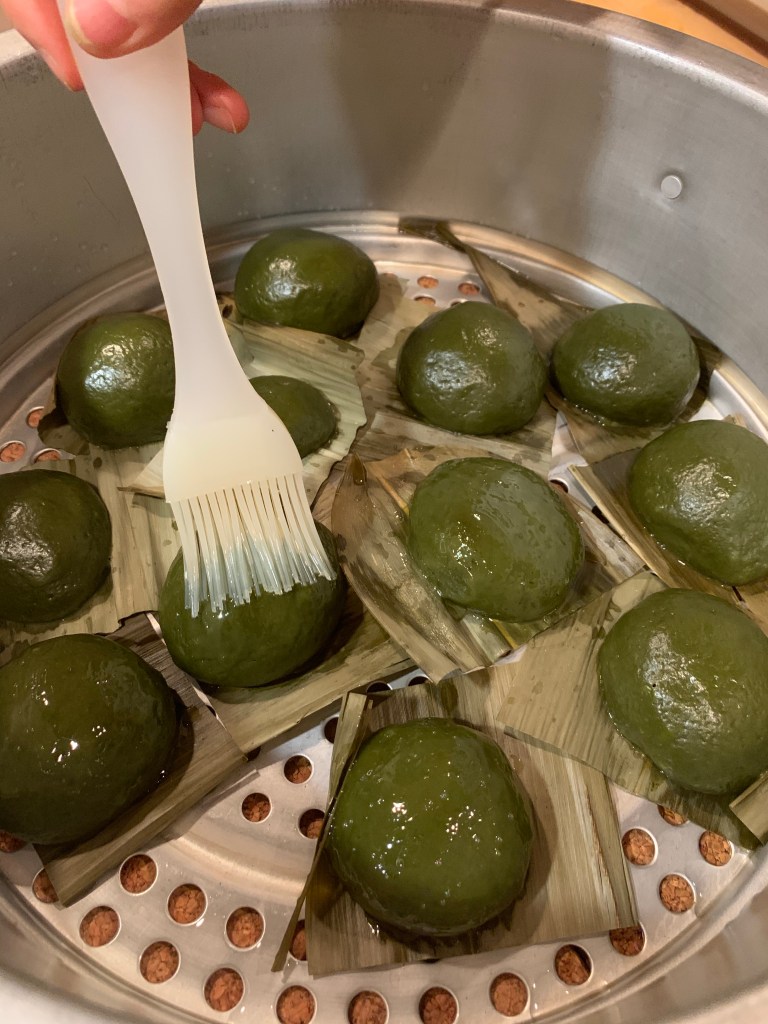
While they are hot, brush them with some coconut oil on the top surface. This technique prevents cracking.
These green dumplings traditionally are consumed cold. You can wrap each individual in plastic wrap and store into the fridge for up to 3 days.
Pack together the filling ballsOnce all ingredients for the glutinous rice flour wrap are incorporated, knead with your handsOnce the dough attains this sticky but solid texture, take the dough ball out of the bowlThrow a 20 g disc of dough into the boiling water, stirring to avoid the disc from sinkingOnce the disc floats to the surface, remove and sandwich between the two raw balls of doughKnead raw and cooked togetherRoll into log and split into 8 balls
Carve the ball into a teacup shape
Place the filling into the skin. Hold the base of the ball in one hand, consistently turning the ball as if turning a lightbulb. With the other hand, and twist at the top of the ball until excess forms. Your hands should be twisting in opposite directions. Snap off the excess. Roll around to smooth out.Place on banana leaf sheetGlaze with coconut oil after steamingEnjoy!
I hope you all have been well during this strange, vulnerable crisis. During our darkest hours, we turn to food as a source of comfort, order, and distraction. Unfortunately, Chinese holidays – structured get-togethers studded throughout the year – have barely sustained 2019 due to the global pandemic. After all, unification and intimacy are fundamental to a holiday– the kitchen of your grandparent’s apartment doesn’t expand farther than six feet. I hope my Holidays All Year Round blog encourages you to reconsider how we celebrate; I hope this post serves as virtual hug and reminder that regardless of where you are, who you are, if getting through the past three sentences was the most you’ve accomplished today, we can celebrate together. I’ve decided from this post on until the end of the US lockdown, each recipe will be dedicated to my Celebrate Together Movement. Suddenly faced with a lot extra time from online school and meager phsyical activity, I’ve poured and will pour my heart out onto this blog by posting recipes more frequently, whether the festival is near or not. Please share this movement with your surrounding community, whether for a source of Chinese history, food recipes, or just some laughs. I think it will really better some one’s day to feel connected in this online community.
During 2020, mainland Chinese missed the majority of Chinese New Year but luckily caught the tail end of the Qingming Festival. Coincidentally, the festival dedicates its activities and customs to late ancestors, where families sweep and worship the tombs of ancestors. Contrary to the haughtiness and looseness of CNY or Dragonboat Festival, the Qingming Festival humbles worshippers and enlightens them with what really matters: family. Now more than ever, we must appreciate the limited time we share with each other and eulogize those that we have lost, particularly to COVID-19.
But in the presence of food, nothing ever gets too serious. After worshipping the tombstones, families reunite atop one dinner table with a spread of “cold foods”. The historic “Qingming Fire Ban” restricted all house holds from using fuelwood, thus ancient Chinese prepared precooked foods to last them through the holiday. During the Han Dynasty’s Cold Food Festival, the fire ban lasted for one month, but cold food did not sit well in the stomach and so the Tang Dynasty shortened the event to three days. After Mongolians took over the reign of China during the Yuan Dynasty (1279-1368 CE), the fire of the “Cold Food Festival” disintegrated. Nevertheless, “cold food” customs still linger around Qingming, a quintessential dish called soft wraps 润饼.
One of the few dishes left from the Cold Food Festival, soft wraps or “thin Wraps薄饼”, employ the meager ingredients of flour and water to create sticky, thin dough. However, the mixture process requires skill, so most purchase the wraps from specialized wrap-making shops. The quick, circulating movements of the hand entice crowds, serving as a form of entertainment itself. Once shaped into the size of a soccer ball, the chef holds the dough in one hand and plunges it onto a piping hot flat griddle. The ball immediately hovers back into the air and descends back down, stretching the cooking surface as a thin layer of dough. This entire process should take place in a few seconds: the first second, the paper-thin dough descends to stick onto the surface of the griddle, and after another three seconds of crisping, the wrap ascends to the mouth, ready to eat. In wrap-making shops, two to three chefs work around several griddles like an assembly line, where each is assigned a specific job either to swoosh the dough, lift the wrap off the griddle, or collect and pack the wraps into bags.
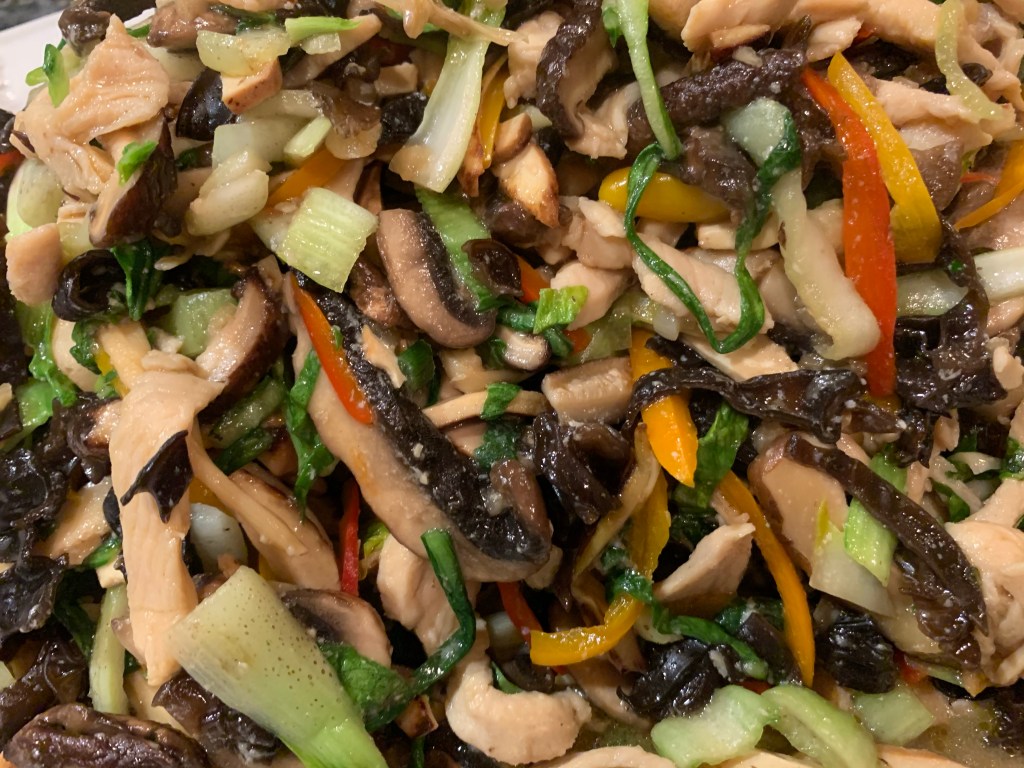
The Soft Wraps contain two textures: the tight wrap and the flaccid filling. People in Chaoshan 潮汕 embellish sweet soft wraps in crystals made of cane sugar and maltose. Their savory wraps consist of eggs, meat, sausage, mushroom; the vegetarian wraps tuck sprouts and chive. The Quanzhou 泉州 region enhances their wraps with julienned carrots, oysters, meat, and parsley. Ultimately, Xiamen’s 廈门 soft wrap fillings tops them all: chefs pre-cook the filling ingredients and cool them in individual bowls. The bowls multiply to spread a whole banquet table, thus crowned with the honor of “Banquet in a Wrap 春饼宴”. Fillings of peas, bean sprouts, bean curd, fish balls, fish slices, shrimps, diced pork, clams, radish, scrambled eggs, peanut powder, seaweed, bamboo shoots, dried fish, minced garlic, mustard, chili sauce, and parsley– it is not a coincidence this custom lasted.
Alas, here is the recipe that serves 4:
Ingredients for the Wraps:
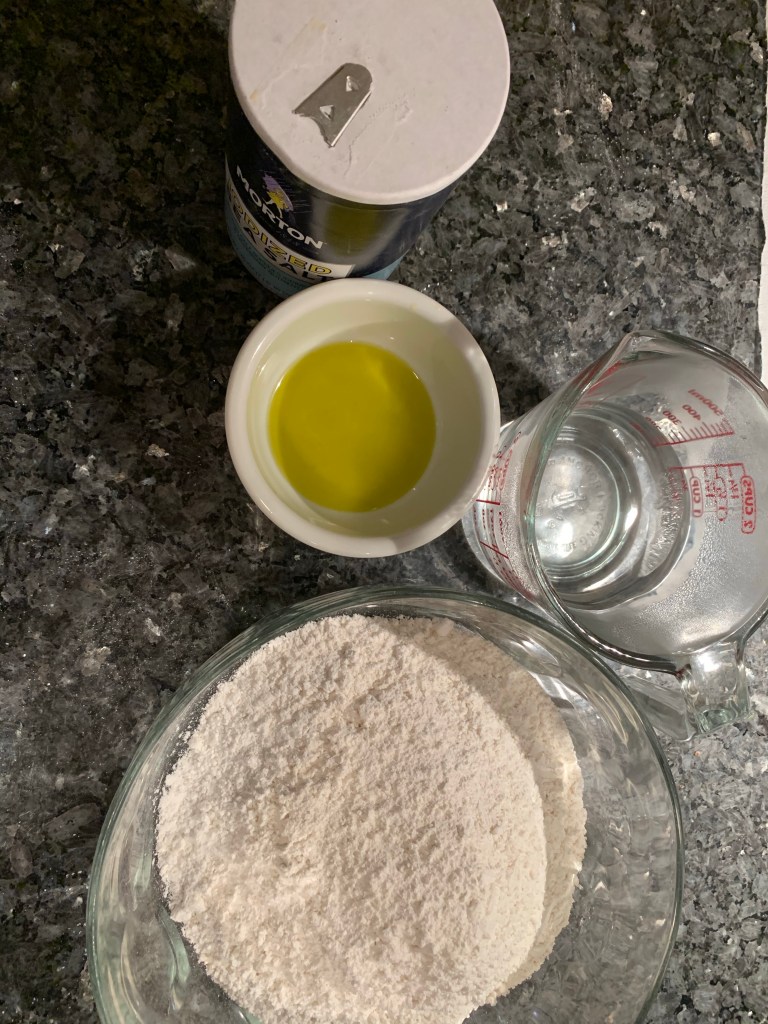
400 grams cake flour
4 tsp salt
8 tsp olive oil
240 ml boiling water
Ingredients for the Filling:
2 TBS cooking oil (to sauté the chicken)
2 TBS cooking oil (to sauté the vegetables)
1 cup (c.) of dried wood ear mushroom
1 c of thinly sliced combined red, orange, and yellow peppers
1 c of baby bella mushroom
1 c of shitake mushroom
1 c of edible daylily
1 c of thinly sliced Bok choy
1 c of thinly sliced firm tofu
½ c of diced preserved radish
Salt and pepper to taste
Ingredients for the marinated chicken:
2 c of sliced chicken breast
1 TBS cooking wine
2 TBS corn starch
½ tsp salt
¼ tsp black pepper
1 egg beaten
2 scallions
Directions for the Wraps:
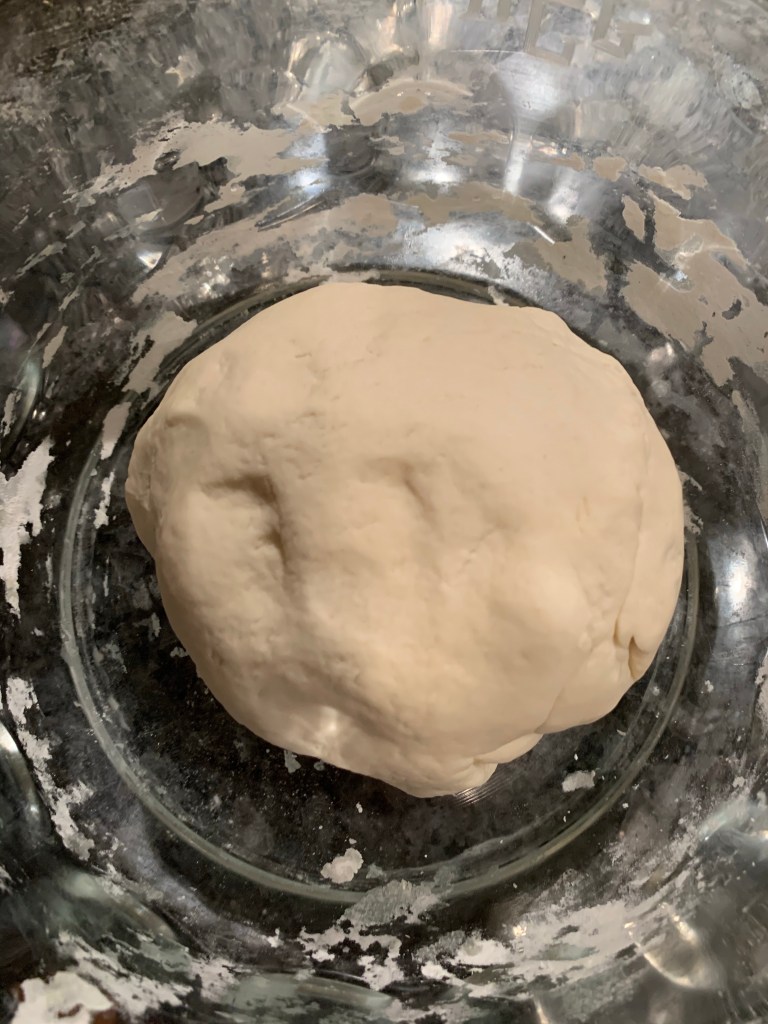
First, we will tackle the soft wraps. Combine the cake flour, salt, oil, and water in a big bowl. Knead the dough for 5 minutes then set aside to let it rest for 20 minutes.
Knead the dough, roll it into a log, cut into 8 equal portions, and roll each into a thin circle.
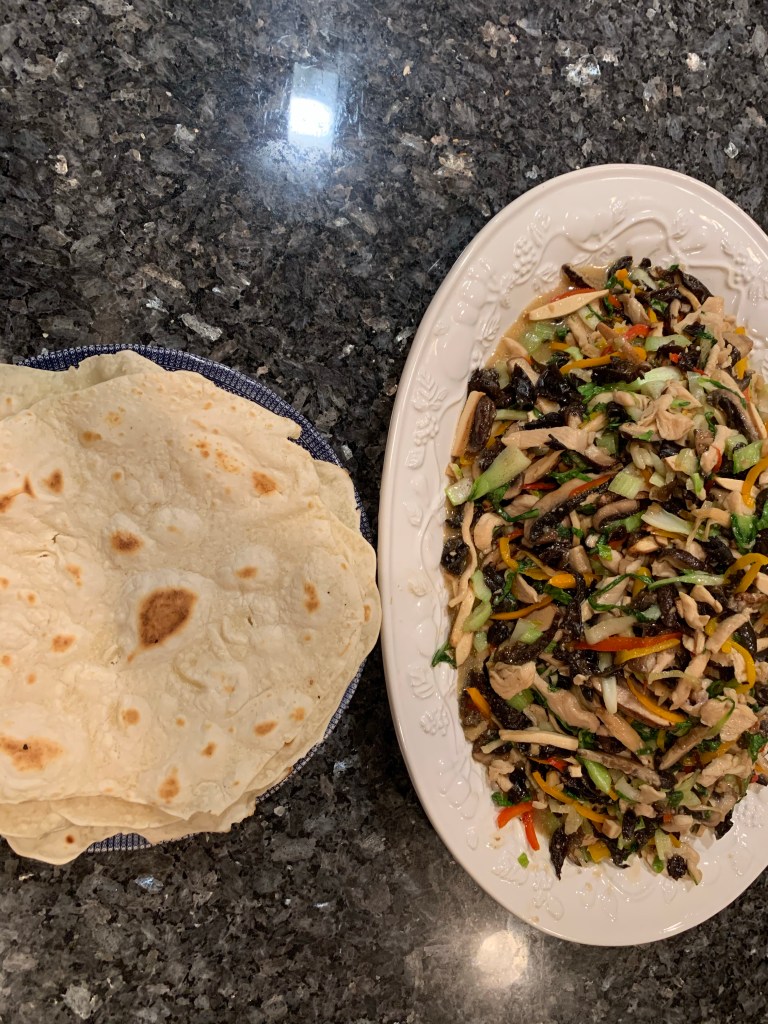
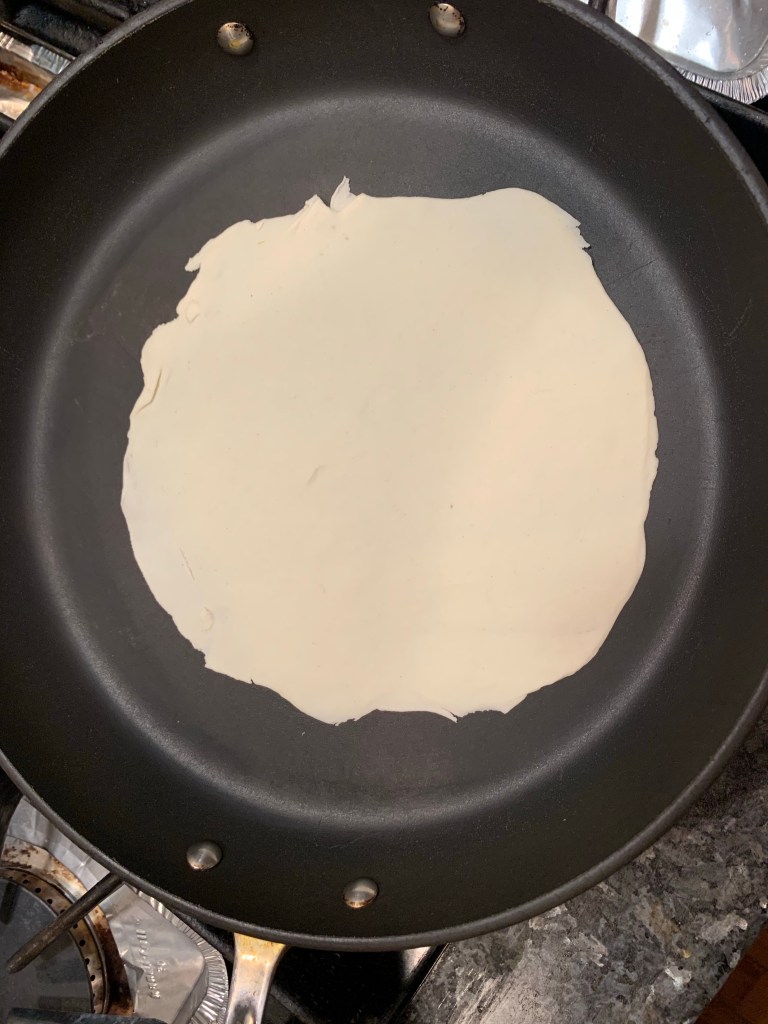
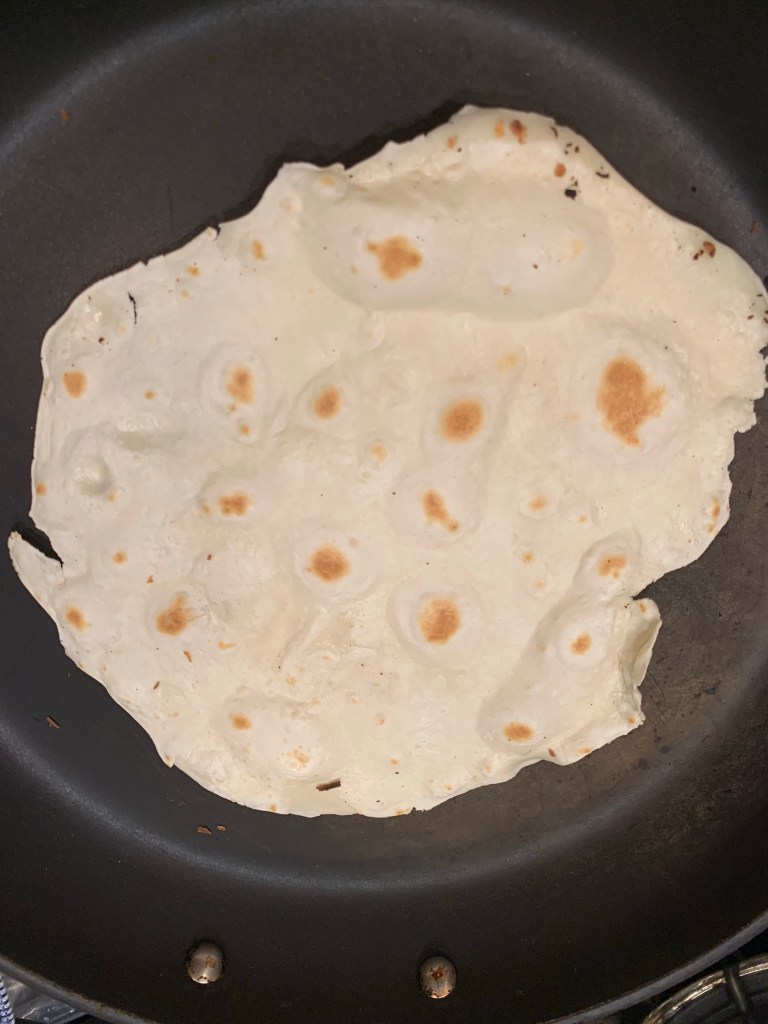
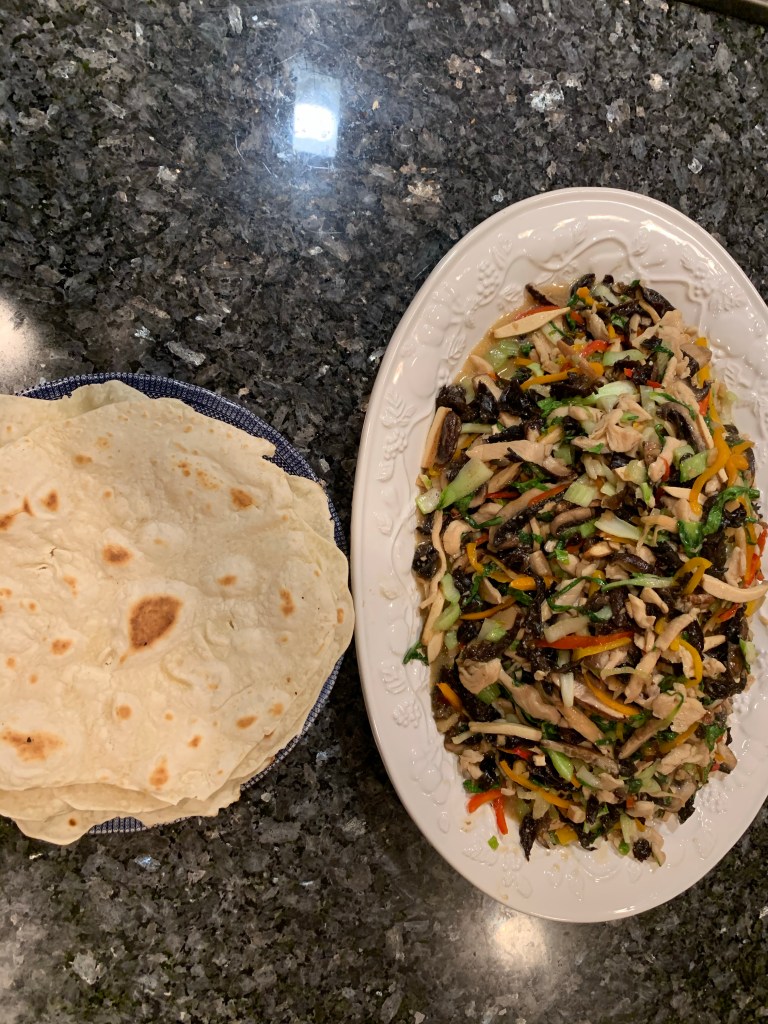
Place the wrap onto a pre-heated saucer pan on medium flame, rotate the wrap while cooking until one side starts to form pair bubbles, flip to cook the other side. When both sides have golden to dark brown spots, the soft wrap is done. It should take around a minute on each side for medium heat.
Set all 8 cooked wraps aside ready to serve.
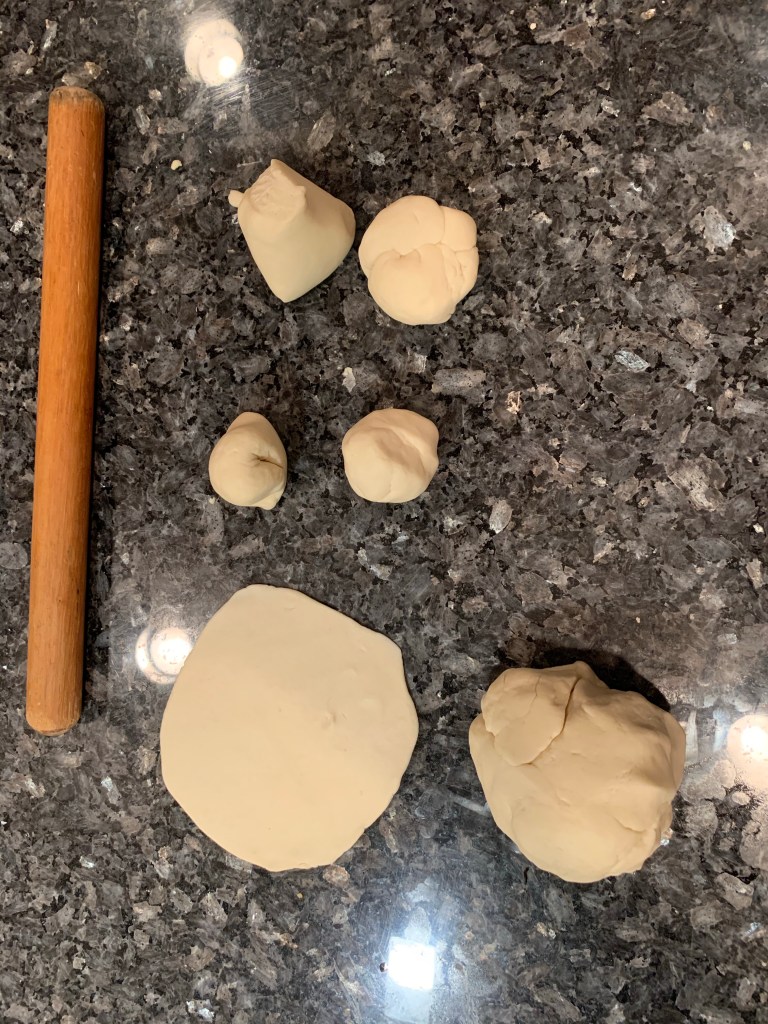
Combine wet and dry wrap ingredientsPrior to this picture, I split the dough into two sections and then split one section into four-five sections. The second half is depicted in the bottom right corner, whereas the four balls already split are at the top. You may find that this is easier when working in a smaller space; you may also find that the dough can produce more than 4 wraps. No fret, more soft wraps for you to enjoy! Place on panLet once side develop golden brown bubbles, and flipOnce the other side develops the golden brown bubbles, your wrap is ready
Directions for the Filling:
Combine chicken, cooking wine, salt & pepper, egg, corn starch, and scallion, set aside to marinate for 20 minutes.
Sauté the marinated chicken in 2 TBS oil. Set aside.
In the same wok, add 2 TBS cooking oil, and sauté the vegetables by adding one item at a time in the order given in the ingredient list until all are cooked about 8 minutes in total.
Add salt and pepper to taste.
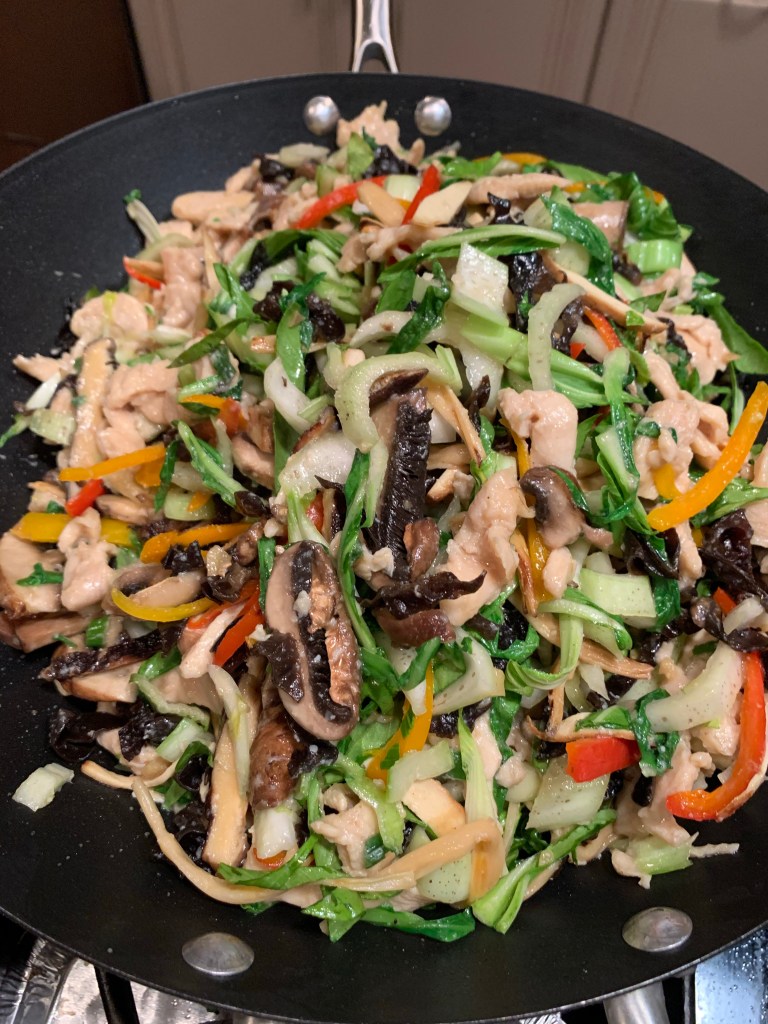
While the flame is still on medium, add back the cooked chicken. Cook and mix well for 1 minute.
This is actually a vertical, not horizontal, depiction of the dishEnjoy together!
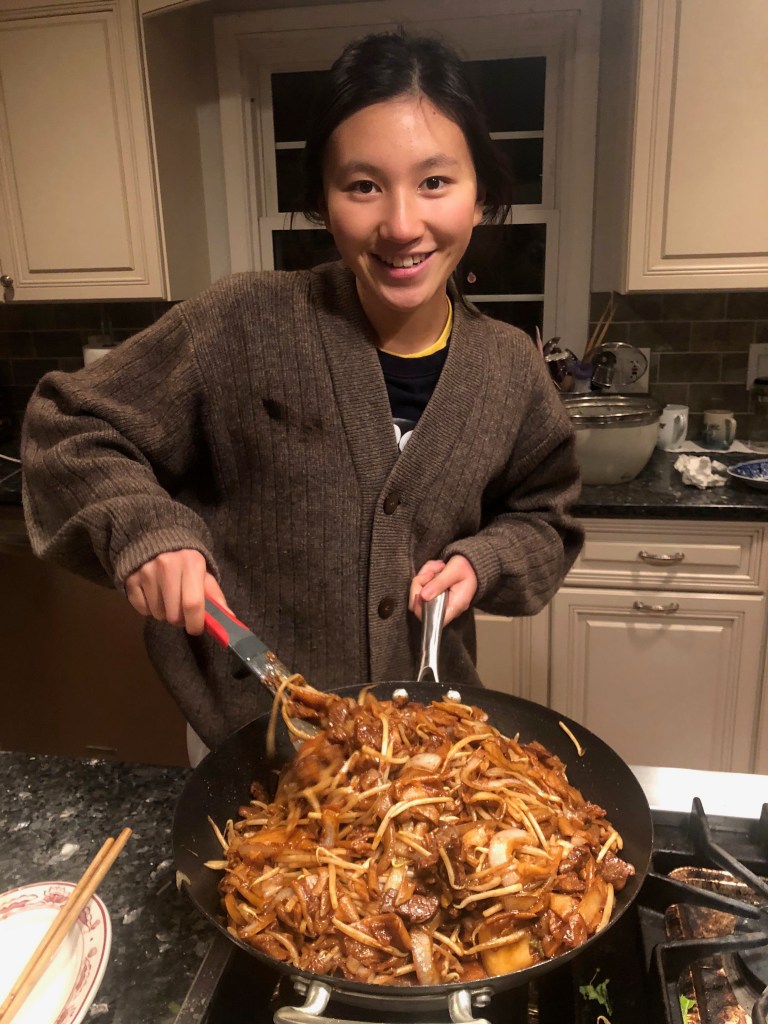
Are you scared? Have you been awoken by the sirens, or the silence that seems to be even more threatening? I fear a lot, and I feel guilty that I fear. It’s a privilege for us to be worrying about boredom, to sit at home inactively, to read the headlines without thought of what’s to happen with our jobs. But it’s purposeless to feel scared, and worse, to be ashamed of it. To combat this struggle, I’ve tasked myself with the responsibility to build an online community through Chinese Holidays. You may think Chinese holidays – structured get-togethers based off of unification and intimacy – can barely sustain social distancing orders and deprived pantries. After all, the kitchen of your grandparent’s apartment doesn’t expand farther than six feet. This movement redefines how we celebrate; wherever you are, whoever you are, even if day’s old lo mein is the only product sitting in your refrigerator, we can celebrate together. Now more than ever, we confide in our internet friends for laughs and a sense of intimacy that reaches beyond the screen.
The Celebrate Together Movement will not force you to make an elaborate Chinese New Year Meal in mid-April, wrap homemade dumplings involving certain levels of dexterity (you already failed at crocheting), construct elegant Zi Fu buns personifying zodiac animals (Animal Crossing didn’t look too good for you). The movement does not shame you for sitting at home and accomplishing nothing. In fact, the movement celebrates it. Even reading a post will contribute, pulling out the old flour bags and baking soda mixtures is doing something: no matter what you do, participating in this community is an act of celebration.
Suddenly faced with a lot extra time from online school and meager physical activity, I’ve poured and will pour my heart out onto this blog by posting recipes and stories more frequently, whether the festival is near or not. We find so much comfort and normalcy in the simple acts of learning and immersing ourselves in a topic foreign to us. Please share this movement with your surrounding community, whether for a source of Chinese history, food recipes, or just some laughs. It will really better some one’s day to feel that they play a role in this online community. So let’s do what we do best: nothing at all.
Yuan Xiao, balls of fermented glutinous rice, are the convivial heart of the holiday. Yuan Xiao bounce chubbily in boiling pots of water, its warmth sending rays of ardor. While the cool temperature of the ball typifies readiness, teeth sink into a scorching peanut paste. Heat, the primary source to its delectability, is also a figurative description of the environment where Yuan Xiao was created. After a few days of heavy snow, Minister Dongfang walked into the Imperial Garden to pick plum blossoms for Emperor Wu, leader of the Han Dynasty. Despite the cold, he felt an entrapping warmth in this garden: a palace girl was bursting into tears, her legs dangling down a well ready to jump. Dongfang asked why she wanted to end her own life, and after exchanging some basic information, he found out her name was Yuan Xiao. Since Yuan Xiao started working in the palace, she never reunited her family. Yuan Xiao would rather die than be incapable of serving her family. Dongfang listened to her story, felt sympathy, and made an inhibited promise she would reunite with her family.
The following day, Minister Dongfang set up a divination booth on the street in the capital city. Many rushed to hear expected words of luck, but received the same frightening prediction “Body burnt on the Sixteenth of the first month”. People rushed to the palace to report to Emperor Wu, criticizing the false prediction.Emperor Wu discovered from Dongfang that the city had disrespected the Jade Emperor in heaven so much so that the Emperor would send the God of Fire to burn all those who have sinned. Dongfang innovated the one thing that could tame the ferocious, heated God of Fire: the soft, pillowy balls of Yuan Xiao. Dongfang urged each household to make glutinous rice balls in addition to lanterns, which neighborhoods would line their streets with at night so the Jade Emperor believed the city was already on fire. He encouraged other celebratory – and life-saving – tactics such as firecrackers and fireworks to distract the Jade Emperor from their own deaths.
On the eve of the fifteenth day of the first month, the city bustled with bright lights and the brightest idea of Dongfang. Every household hastily wrapped Yuan Xiao, constructed lanterns, marked their names on each, and hung them on lampposts and street signs. When every light bulb, every candle, and every firecracker in the city were lit, people filtered out of their houses to observe the fiery beauty that had engulfed the city. Even the family of Yuan Xiao traveled from the rural outskirts to watch, and when the parents spotted a large lantern with the name “Yuan Xiao”, the shock generated exhilaration. The parents shouted their daughter’s name, and when Yuan Xiao heard the voices of her beloved family, she knew she was home.
After a night of lanterns, snacks, fireworks, and reunion, the capital city remained safe and intact. Emperor Wu was so pleased with Dongfang’s predictions and tactics that on every 15th of the first lunar month, he ordered rice balls to worship the fire god and ordained the holiday, Yuan Xiao Festival.
In the past millennium, Yuan Xiao developed into distinctive shapes and tastes. The rice wrap can be made of a different kind of rice or wheat, and the filling can entice the tongue with savory or sweet notes. Sweet fillings include flower-scented sugar, hawthorn, red bean, sesame, or peanuts. Salty fillings of the five-spice Yuan Xiao compose of mustard, garlic, chive, green scallion, and ginger, which translates to hard work, longevity, and movement upward. The methods of cooking diversify from boiling in a soup, to stir-frying or deep-frying, to steaming. The sizes of Yuan Xiao vary from as large as walnuts to as small as soybeans. Some even choose to leave their Yuan Xiao unfilled, embracing the cucu texture of a ball of glutinous rice flour. Methods of preparation differ between the North and South: in the North, Yuan Xiao are rolled in a bowl of flower, while in the South, Tang Yuan are rolled in the palm.
From their chubby and dewy appearances, Yuan Xiao and Tang Yuan are the same, both consisting of glutinous rice flour skin that encase a rich nutty filling. However, from the process, Yuan Xiao and Tang Yuan differ. Last Winter Solstice (December 2019), I taught you how to wrap the glutinous rice dough within the nutty filling of Southern-style Tang Yuan, pinching with your fingers and rolling through your palm. For the 2020 Lantern Festival on February 8th, I will be teaching you the traditional process of wrapping the Northern Yuan Xiao using no hands– just a pan, glutinous rice powder, and a sesame ball. As you construct the delicacies, you’ll compare and contrast the ways in which Yuan Xiao and Tang Yuan are crafted differently. Yuan Xiao requires less manual labor, but the results are delectably the same.
Tang Yuan are more delicately constructed by the hands, thus consist of a thinner skin.
Yuan Xiao require more “foolhardy” techniques, with a complete absence of hand formation. The skin is usually thicker, and the ball is overall fatter.
Ingredients:
1 Cup of Black sesame
½ C of Sugar
6 Tbs Coconut oil (melted)
Water
1 lb. of glutinous rice flour
Ingredients and appliances shown above.
Steps for the black sesame filling:
Roast the black sesame in a toaster oven on 200°F for 2 minutes. It’s important not to over-roast your seeds, as they will become too bitter. Afterwards, allow the seeds to cool.
Using a food processor, grind the sesame seeds into a powder, then add sugar into the sesame powder. Quickly pulse 3 times. Add coconut oil into the mixture, and keep the food processor on until you see the mixture becomes a bit runny.
Pour the black sesame mixture into a container. Store it in the fridge for at least 30 minutes until hardening.
Scoop out ½ teaspoon of the hardened black sesame mixture, using both palms to roll it into a ball shape depicted below.
“Naked” Yuan Xiao!
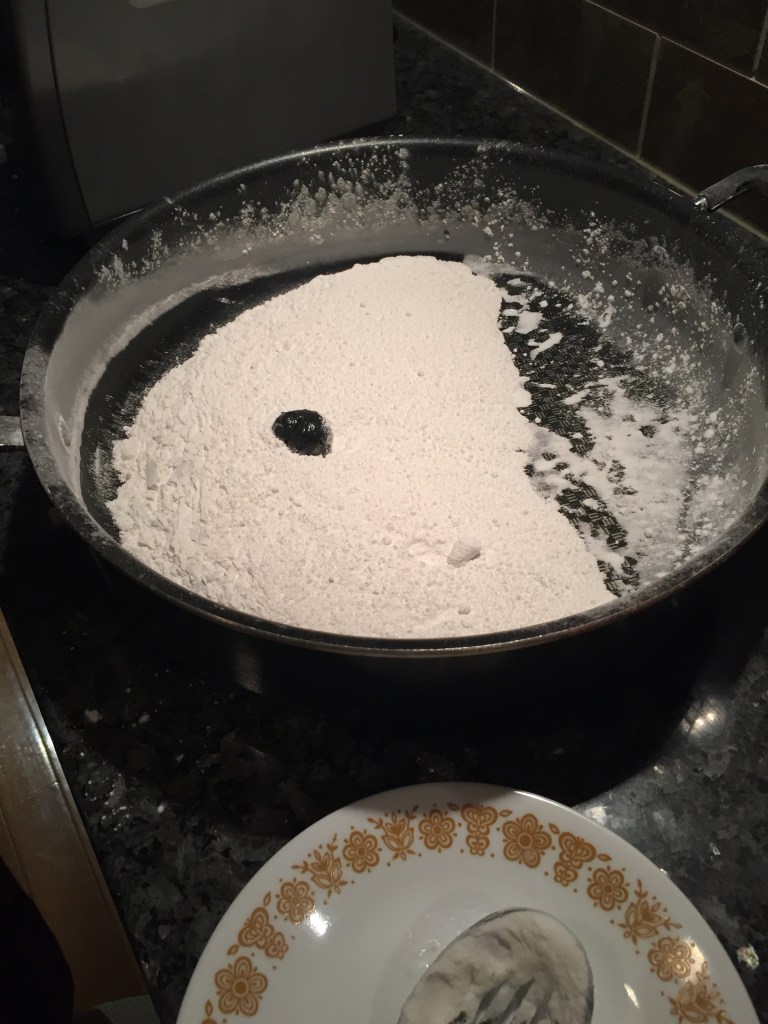
This part of the Yuan Xiao recipe diverges from the Tang Yuan recipe. Instead of mixing glutinous rice flour in water to form a dough skin, you will be placing the filling balls directly in the flour, dipping it in water, and repeating this process.
Steps for the “rolling” process: treat this like a growing baby. Each time the Yuan Xiao goes in for another dry flour roll, it should attain a fatter layer of skin.
Fill a rice bowl with water.
Fill a frying pan with 1 lb. of glutenous rice flour.
Drop five black sesame balls into the flour, then shift the pan back and forth several times until the every side of the sesame balls are coated with flour.
Gently pick up the flour coated balls, and quickly dip them in water. It is crucial that you perform this step with speed to avoid soaking the flour-coated balls in water for too long, as the flour will dissolve.
Drop the sesame balls back to the flour pan again. Shift the pan back and forth until the entire sesame ball are coated with a new dry layer of flour.
Repeat these steps 10 times. The Yuan Xiao should enlarge, like a baby, each time.
Drop the sesame ball in a pan of flour.
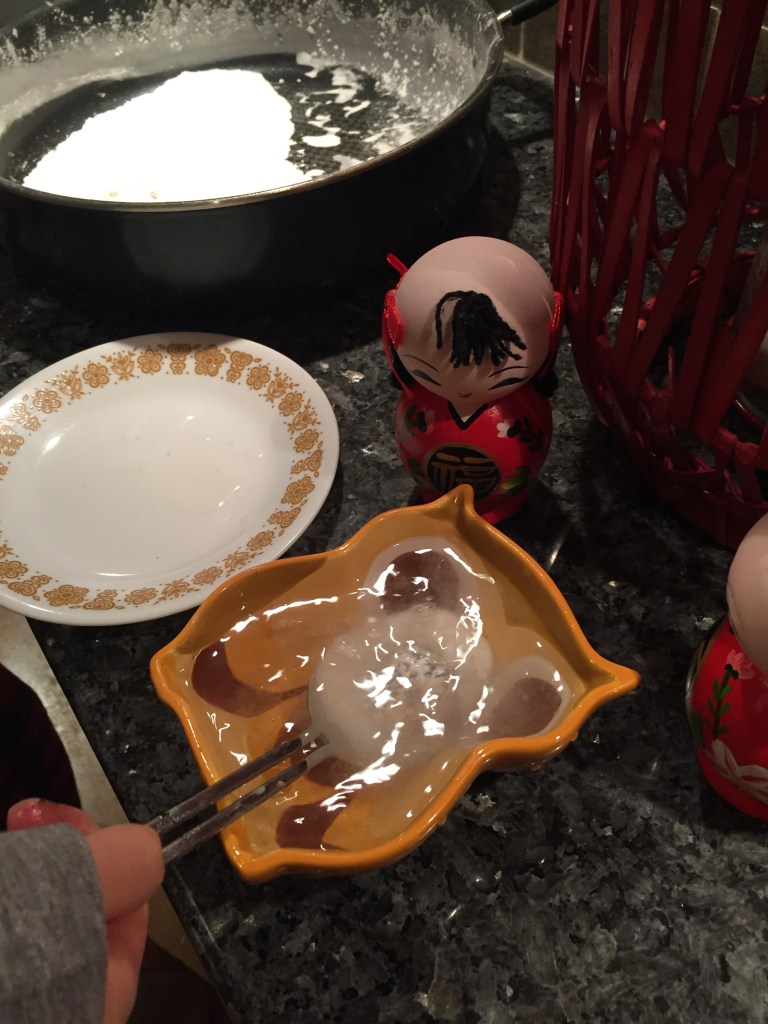
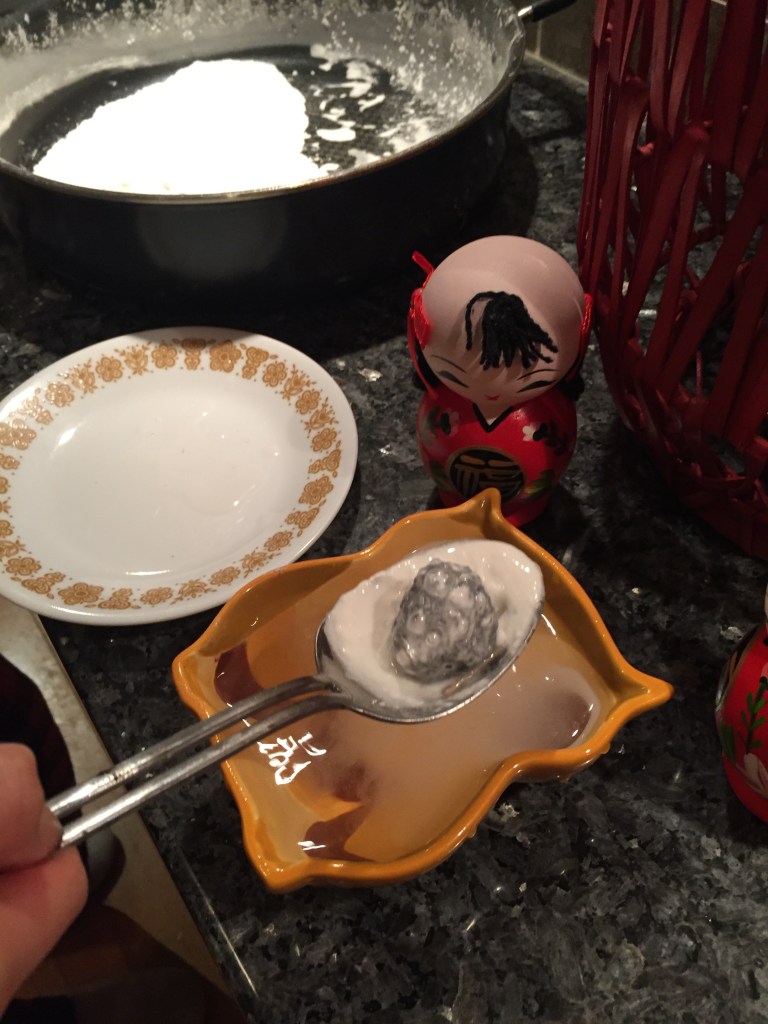
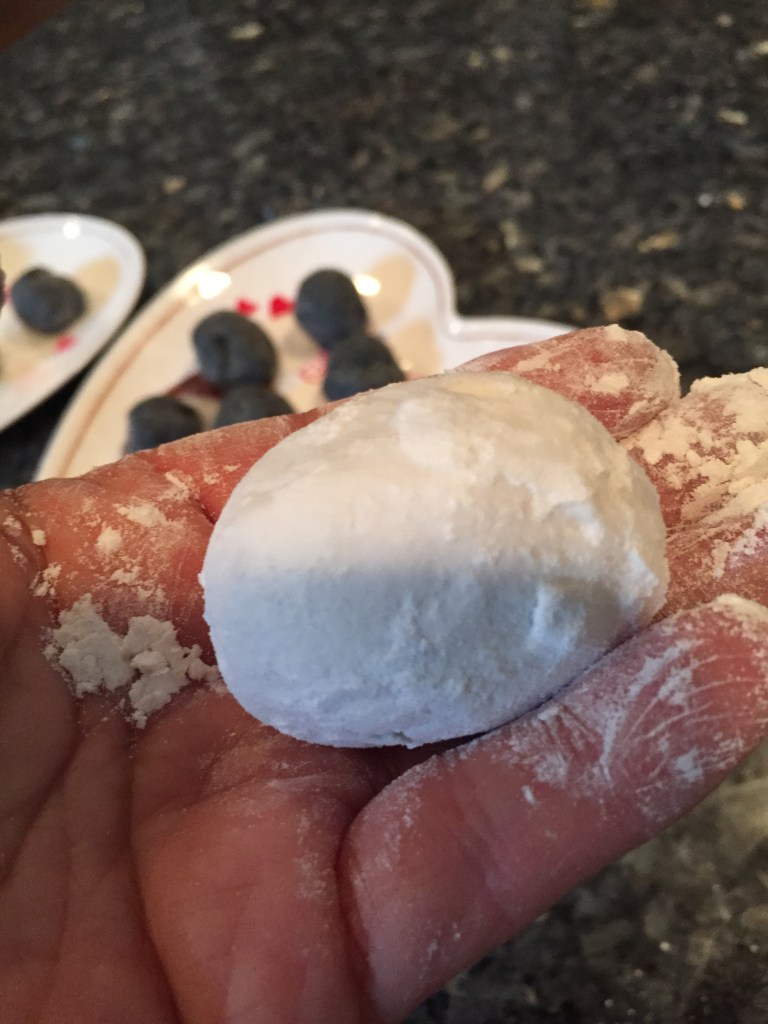
Shift the ball around the pan until the entire ball is covered in flour. I toss the pan to provide an even coat.Spoon the ball out of the pan and drop it into water for a few seconds. This step should be performed swiftly.Spoon the ball out of the water.After 10 repetitions, your Yuan Xiao should fatten up with a thick glutinous rice skin.
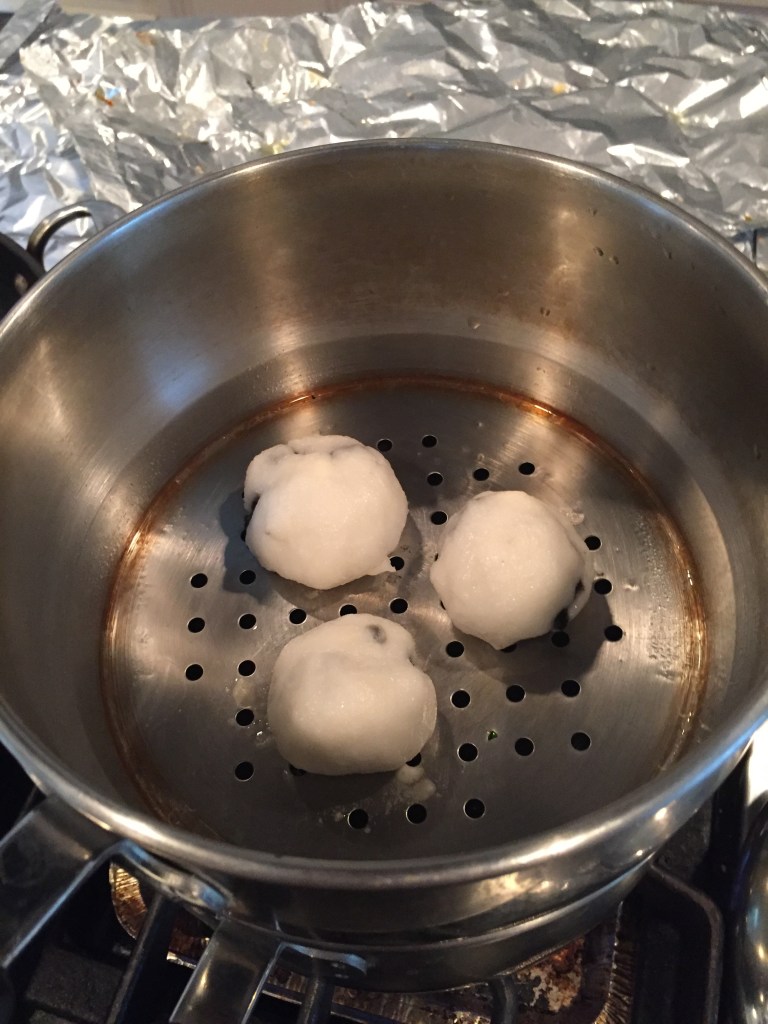
Advice for cooking: you can either steam or boil your Yuan Xiao.
Steam them in a steamer of boiling water.
Boil them in a medium pot of boiling water. Once the Yuan Xiao float, add ½ cup of cold water. When the pot bubbles, turn the flame to medium and boil for another 2 minutes.
My family steams our Yuan Xiao.
CAUTION! HUNGER MAY BE UNSUPPRESSABLE, BUT SO IS THE YUAN XIAO’S HEAT! Because these glutinous rice balls retain both the heat of their filling and hot air, Yuan Xiao may be deadly for your tongue. But if you wait for just enough time (I recommend blowing consistently on the Yuan Xiao for about a minute), the runny black sesame filling burst is worth the anticipation.
The dessert serves many purposes, carrying the namesake of a lonely, dying girl; distracting the God of Fire’s apocalypse; providing an opportunity for us and our future generations to experience Chinese culture through its most genuine form– food.
New Year’s Eve Meal 年夜饭, also known as nian ye fan or Reunion Dinner, gathers the whole family in front of the table for the satiation of the hearts and stomachs. As the central focus of the holiday is gathering, food not only communicates love and devotion to one’s family but lures everyone together through one common dish– or fish. Home cooks pour attention and detail into the menu, where each region hosts its own specialties but unify in their allusion to blessings, prosperity, and happiness for the coming year. Dumplings resemble gold nuggets for prosperity, long noodles for longevity, rice cake for its implication of promotion, leafy vegetable for its homophony with the Chinese word for affection, fish for abundance, chicken for luckiness, duck for harmony, jujube dates for the early arrival of Spring, persimmons for a wish come true, almonds for happiness, and tofu for family blessing.
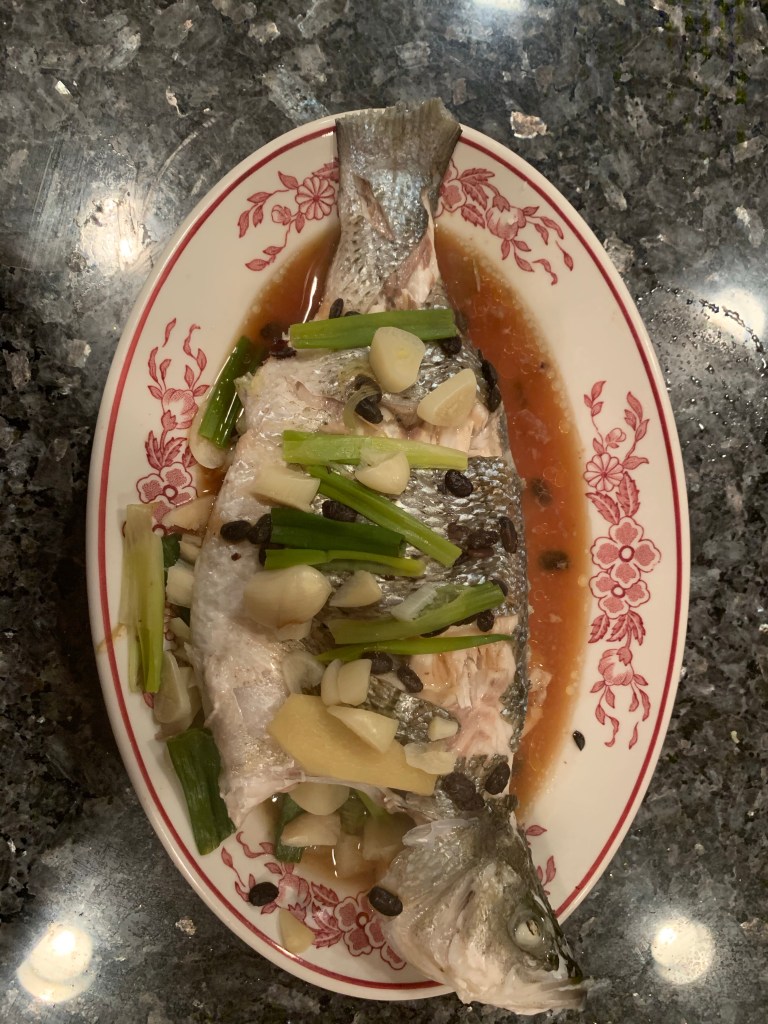
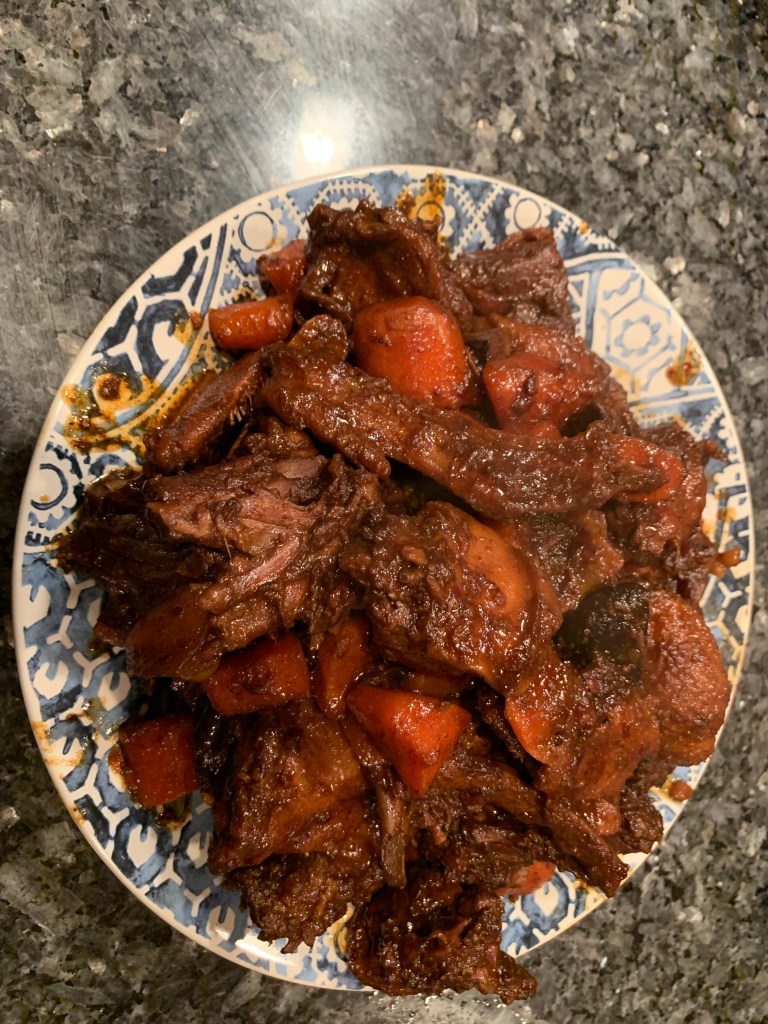
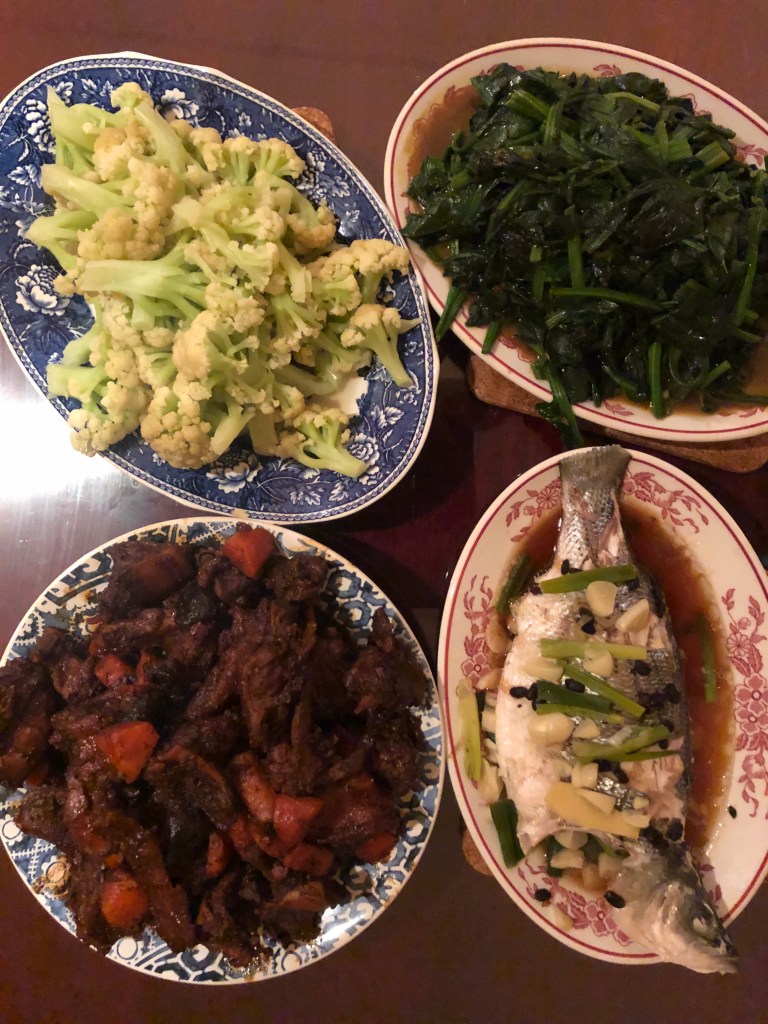
This year, my family decided to cook Beer Braised Duck, also known as Pi Jiu ya, in addition to steamed fish.
Steamed fish with scallion and garlicBeer-braised duck with carrots
Particularly, the Chinese character of fish (鱼—yú) has the same pronunciation as the character余, meaning “surplus” or “extra”. The typical lucky phrase that accompanies the Chinese New Year fish dish is 年年有余 “nian nian you yu,” wishing you to have a surplus of food and money every year.
Families typically buy a whole fish, symbolizing unity and harmony, and steam it with ginger and green scallion. Half of the fish is eaten at the New Year Eve dinner, and the second half is saved for the next day (the New Year Day) to express hope for a new start and to finish with surplus. Some family cook a big-head carp but only eat the middle, leaving the head and tail intact. During dinner, the head of the carp should always point toward the distinguished guest or the elder to show respect for elders. People can enjoy the fish only after the distinguished guest or the elder take their first bite.
With some veggies too!
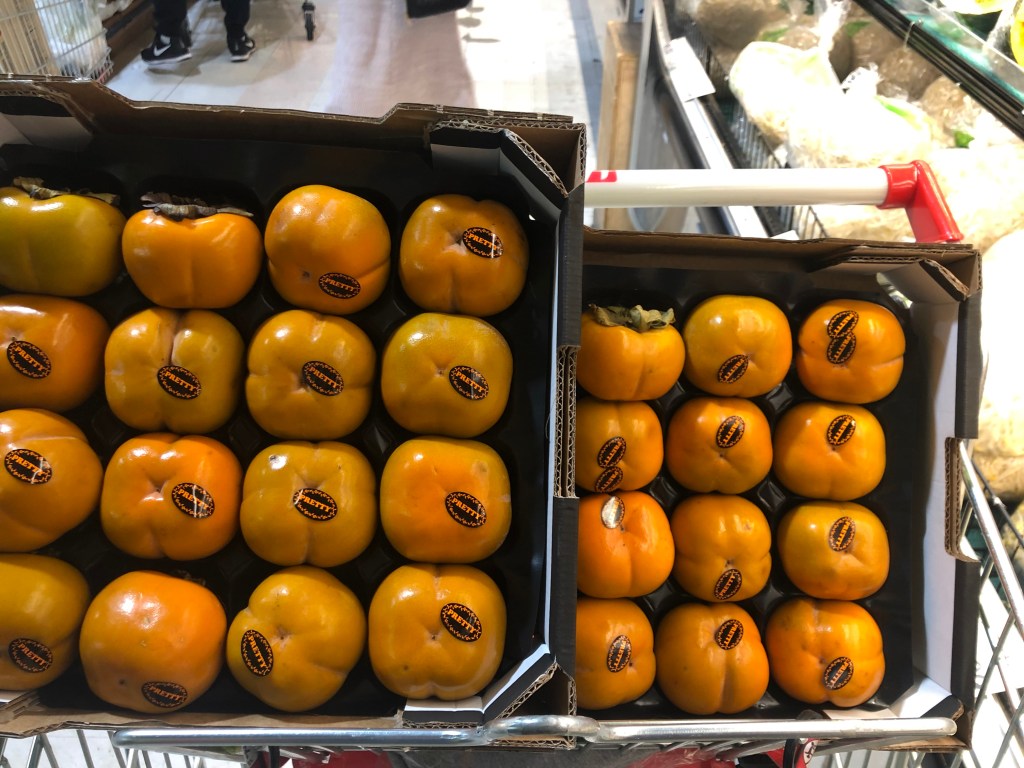
Finish off the meal with some fresh persimmons. You’ll need it.
Every year during this time, Costco stocks up with persimmons! After all, their demographic is largely Asian Americans.
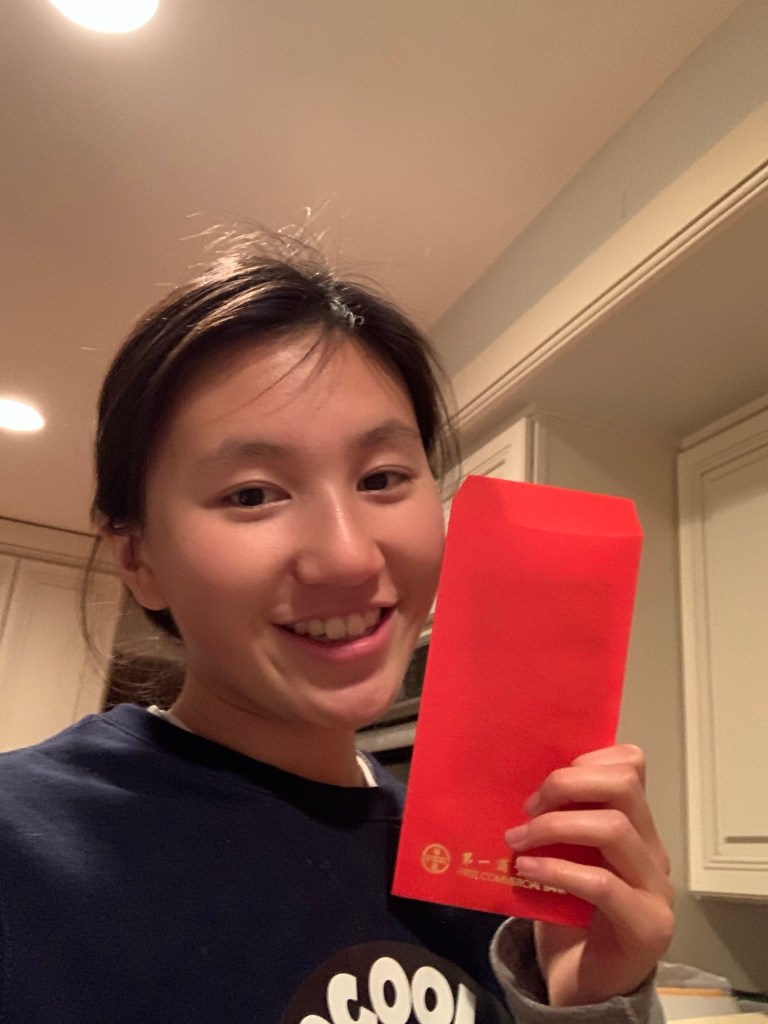
Passed from the wrinkly fingers of elders to the smooth youthful palms of children, lucky money bribes generational connection and fortune. Laid under the child’s pillow or directly to the eager hands, packets are given after the New Year Eve dinner.
According to legend, lucky money defends young children from the little demon called “祟”, or Sneaky. The demon comes out on the night of New Years to touch the heads of sleeping children; but after this seemingly innocent caress, the child would often develop a headache and fever, eventually turning into a fool. A husband and wife of very old age were concerned that Sneaky would defect their beloved child, so they placed eight copper coins under the child’s pillow. In the middle of the night, a gust of wind blew open the door and blew out the lights, adumbrating the beast’s arrival. As “祟” reached out to the child’s head, flashes burst out and scared “祟” into escaping. Eight copper coins in red paper, which evolved into “Lucky Money”, have protected young Chinese children from Sneaky until now.
During the Ming and Qing dynasties, one hundred ancient coins strung along a red ribbon and formed a trail of fortune. The “longevity money” would elongate life span for up to 100 years. But just like a long life, the craft proved to be strenuous, as red paper packages began to house the one hundred coins. After coins evolved to banknotes, elders requested new dollar bills from the bank in consecutive numbers, signifying that the lucky money will last continuously for their offspring. Though grandparents aimed to encourage intense study and exceptional grades, expectation and reality often diverge: the Qing Dynasty poem “Lucky Money 压岁钱” by Wu Manyun 吴曼云 depicted what Chinese children really had in mind. “Hundred coins strung by a red ribbon, they were hid under each’s own pillow; discussing the firecrackers and their prices, causing the children stay up whole night”.
“Hundred coins strung by a red ribbon, they were hid under each’s own pillow; discussing the firecrackers and their prices, causing the children stay up whole night”. – Wu Manyun 吴曼云
Every Chinese New Year Dinner, my grandma from my mother’s side, and the only Taiwanese relative living in the US, joins us for the extravagant meal. This year, as I reached down to embrace my Hao Puo’s now fragile figure, her slender arm reached into her purse and reveled a packet of bright red. This youthful exhilaration, a sensation that has trademarked and personified each American Lunar New Year celebration, is one that I learn to value more and more every year. While there maybe no next Chinese New Year, or next elder to hand me a red packet, this custom – quintessential to the Chinese emphasis on elders – will carry close to my heart.
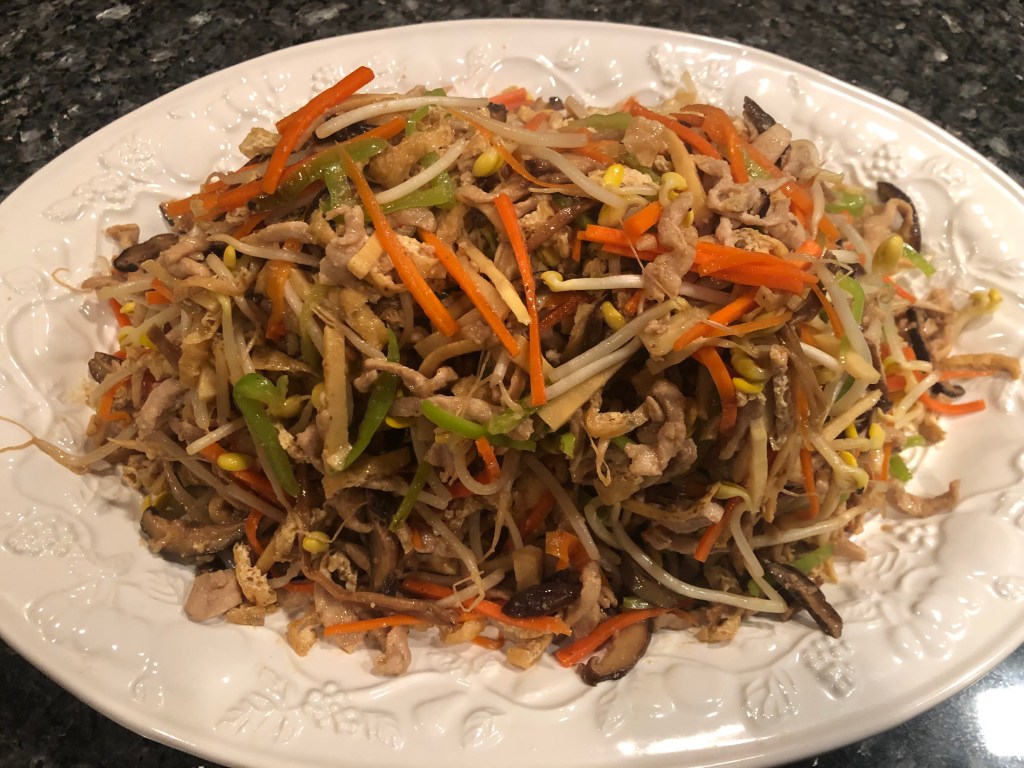
Bā bǎo rúyì cài 八宝如意菜, or the auspicious eight treasures, are a must-have dish during Chinese New Year. Passed down through generations of Tang cooking, the recipe I’m publishing today has perfected through lines of ancestral mothers laboring at their wood-fired stoves. And while the dish is best served at its birthplace, an electric stove pot is acceptable, though shunned.
The secret sauce to their unctuous slew of treasure? My matrilineal sweat. Just kidding, but prepare your arms from some brutal back-and-forth sautéing.
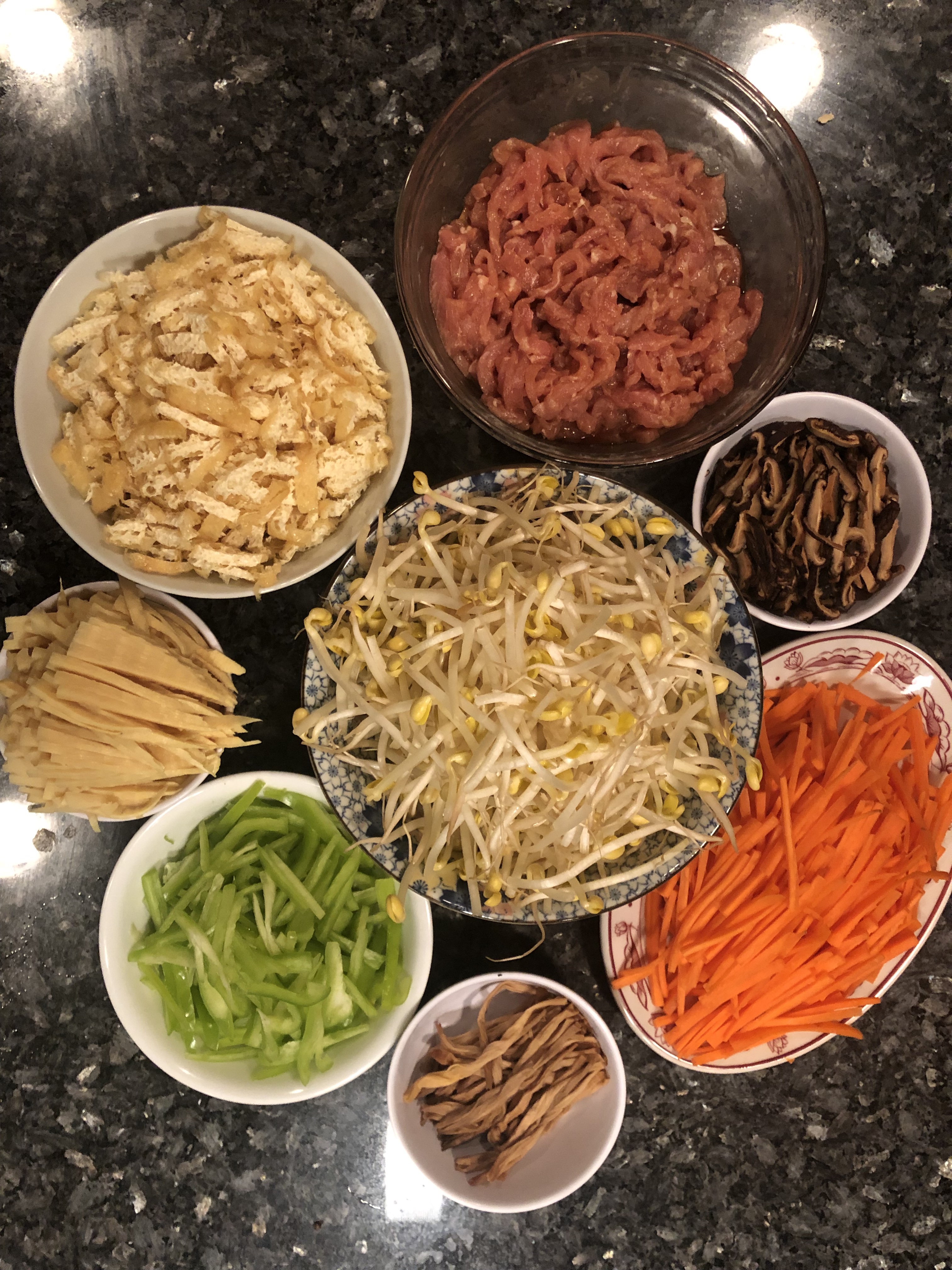
My mother, who learned from my grandmother who learned from her mother, taught me how to curate the right treasures this year. The eight different julienned ingredients compliment each other with taste and texture. The main ingredient for the dish is soy bean sprouts, as its shape is similar to the ancient imperial jade symbol of auspiciousness. The second most important ingredient is the julienned bamboo shoots because they share the similar sound of “everything goes as one’s heart desires”.
Ingredients include:
Soy bean sprouts
Dried daylily
Julienned bamboo shoots, shiitake mushrooms, green pepper, soy puff, and carrots
Pork loin
Sauté all the ingredients, receive your good fortune, and enjoy this familial delicacy of the Spring Festival.
Nian gao, rice cake or New Year cake, is one of the many staple Chinese New Year snacks. The Chinese word for rice cake, or nian gao, correlates to the phrase “nian nian gao sheng,” meaning “elevating year after year” or “promotion year after year”. Some Chinese parents tell their children that eating this will help them grow taller too.
The tradition of eating rice cake dates back to the Spring and Autumn Period around 2,700 years ago, originating from the ancient Wu Country 吴国 located in today’s Suzhou 苏州. During the Jiangsu Province in Ningbo 宁波, households began to offer nian gao to the ancestors and gods. The Topolect 方言, written during the Han Dynasty, first recorded the term Gao 糕 in reference to the rice cake.
The Chinese construct elaborate spreads of offerings for the Kitchen God who, like Santa Claus, reports a “naught and nice” list to the Jade Emperor. The sticky situation of bribery operates most efficiently with sweets. Arrays of candy, red bean paste filled glutinous rice ball, and gooey maltose glue Zao Wangye’s lips together so he cannot talk. If the kitchen god opens with a mouthful of sweets, he must only say sweet and good things. Nian gao is just one of the very many means of bribery.
Nian gao is made of either sticky glutinous rice or yellow rice, giving nian gao two major colors and textures. They are typically savory in the South, and are steamed or cooked with vegetables and meat. Whereas in the North, the flavor of Nian gao is sweet, and the batter often includes lard, rose petals, osthmanthus, hibiscus and mint for extra flavoring. On most Beijing dinner tables, one is sure to find jujube nian gao, or 红枣年糕 hóng zǎo nián gāo.
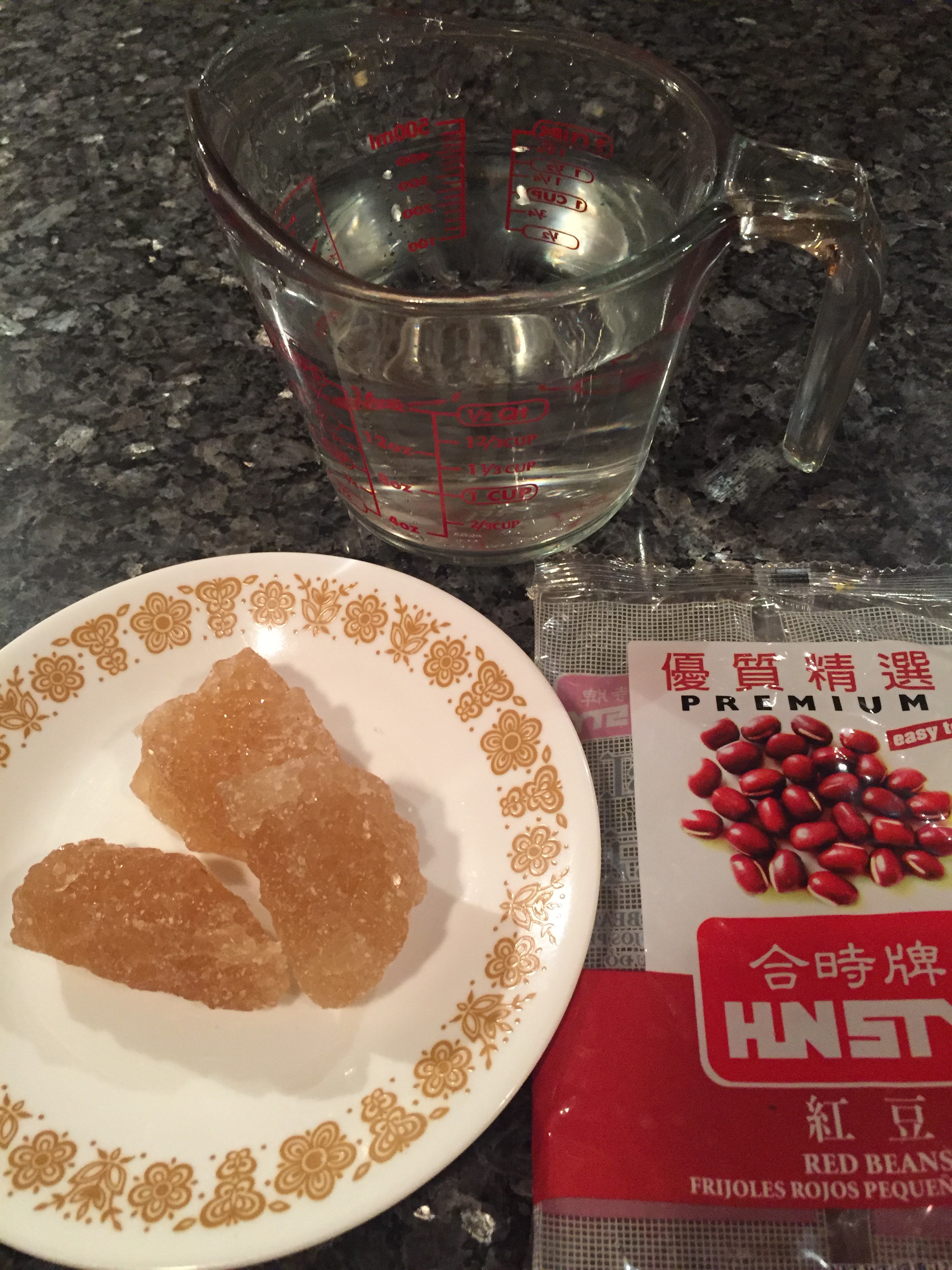
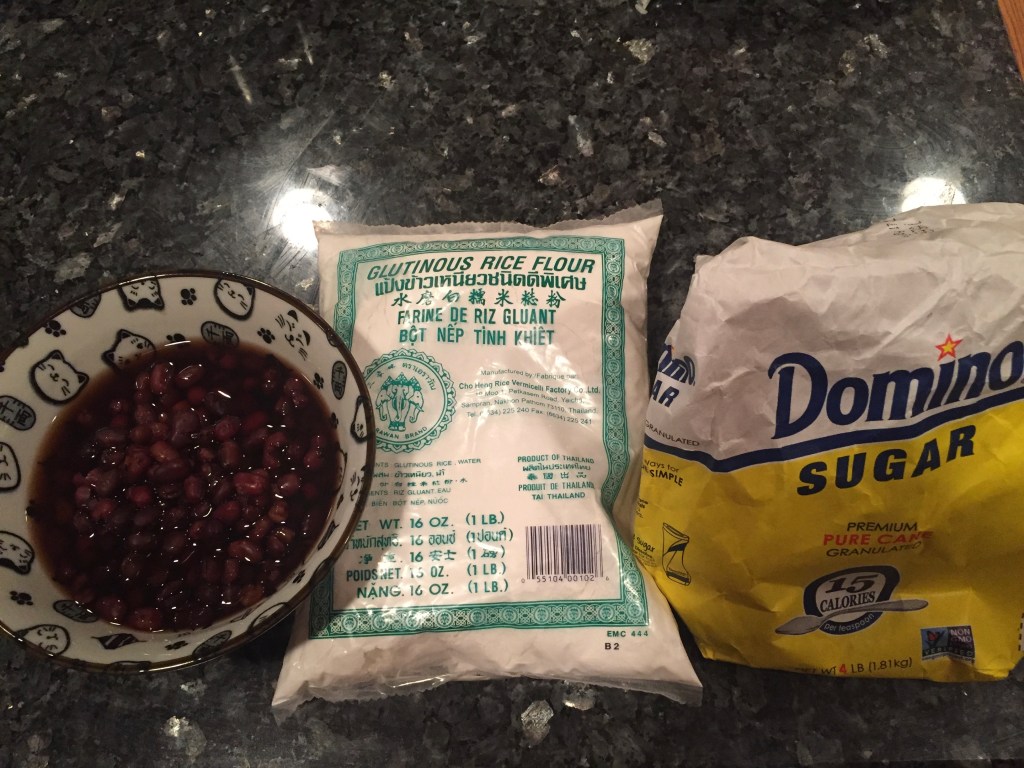
In order to make nian gao, you must first prepare the red bean soup. Ingredients for the red bean soup include:
1 cup of rock sugar
4 cups of water
1 cup of red beans
Soak red beans over night.
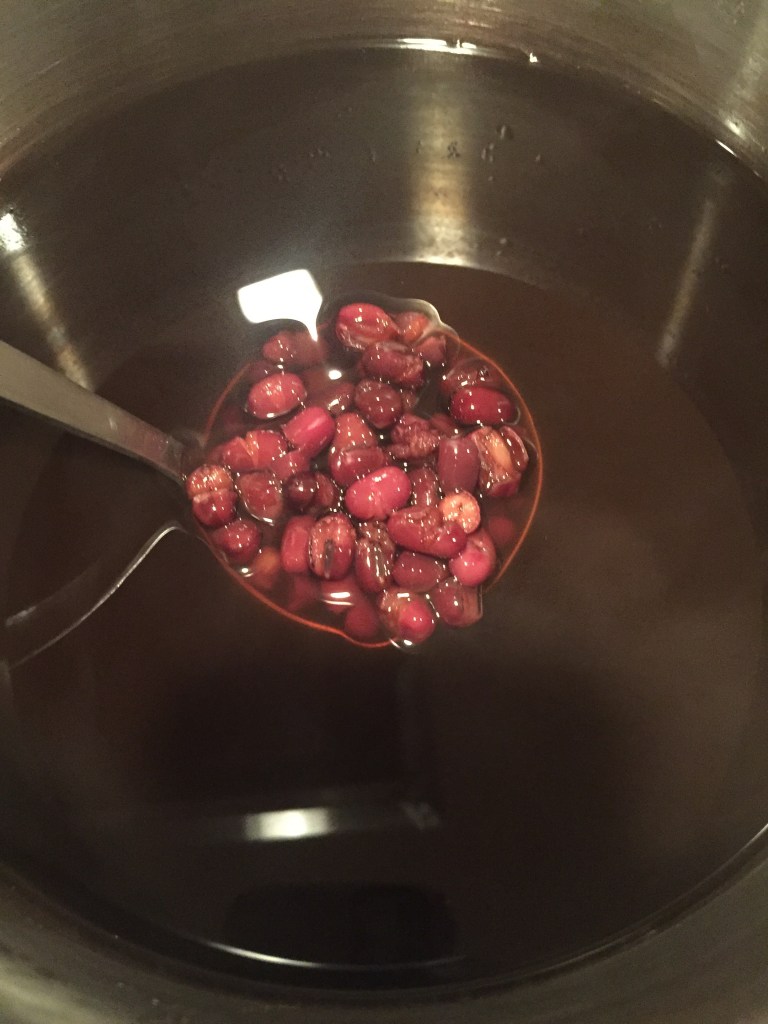
The next day, bring soaked red beans, rock sugar, and water to a boil and turn to medium flame. Cook until red beans turn soft around 25 minutes. Set aside to cool for 10 minutes
Now begin the glutinizing process. Ingredients include:
3 cups glutinous flour
1 cup granulated sugar
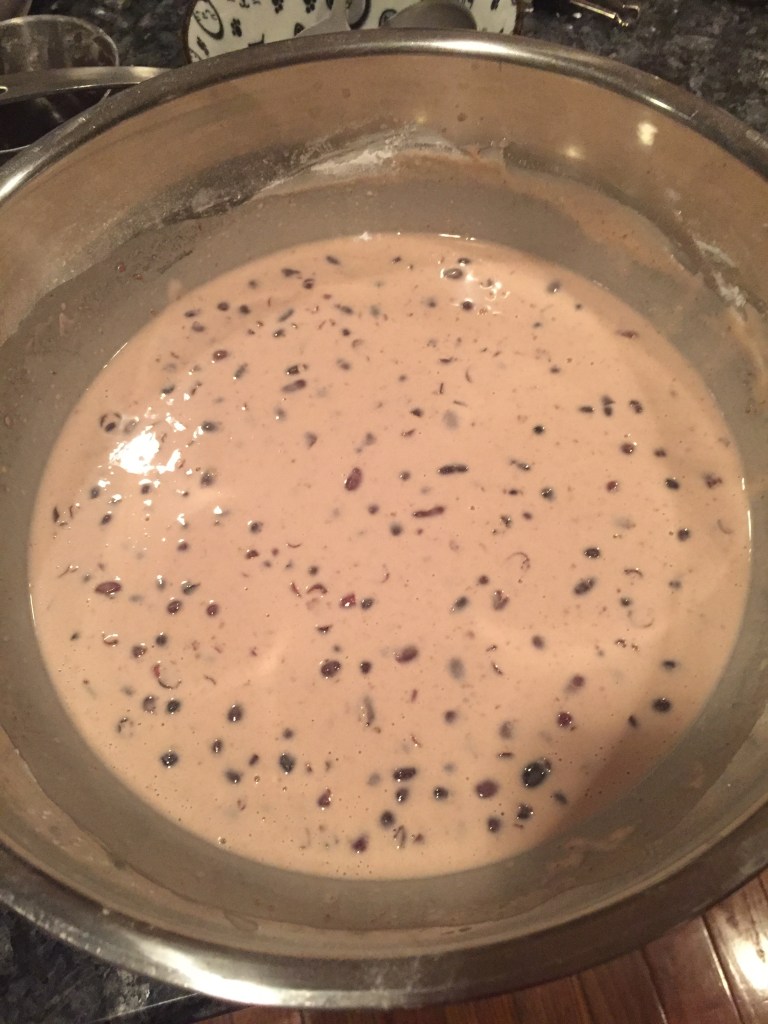
Mix 3 cups of glutinous rice flour, 1 ½ cups of the cooked red beans, 3 cups of the liquid red bean soup, and 1 cup of granulated sugar in a big bowl.
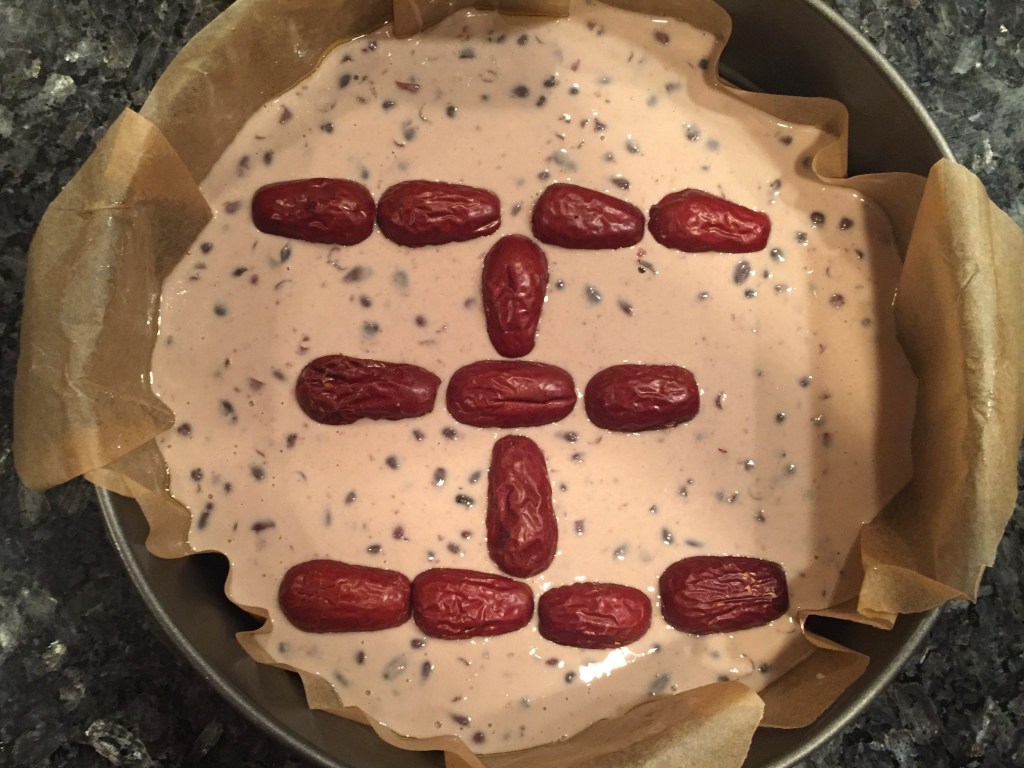
Line parchment paper in a round baking pan (10” in diameter). Grease and pour in the mixture.
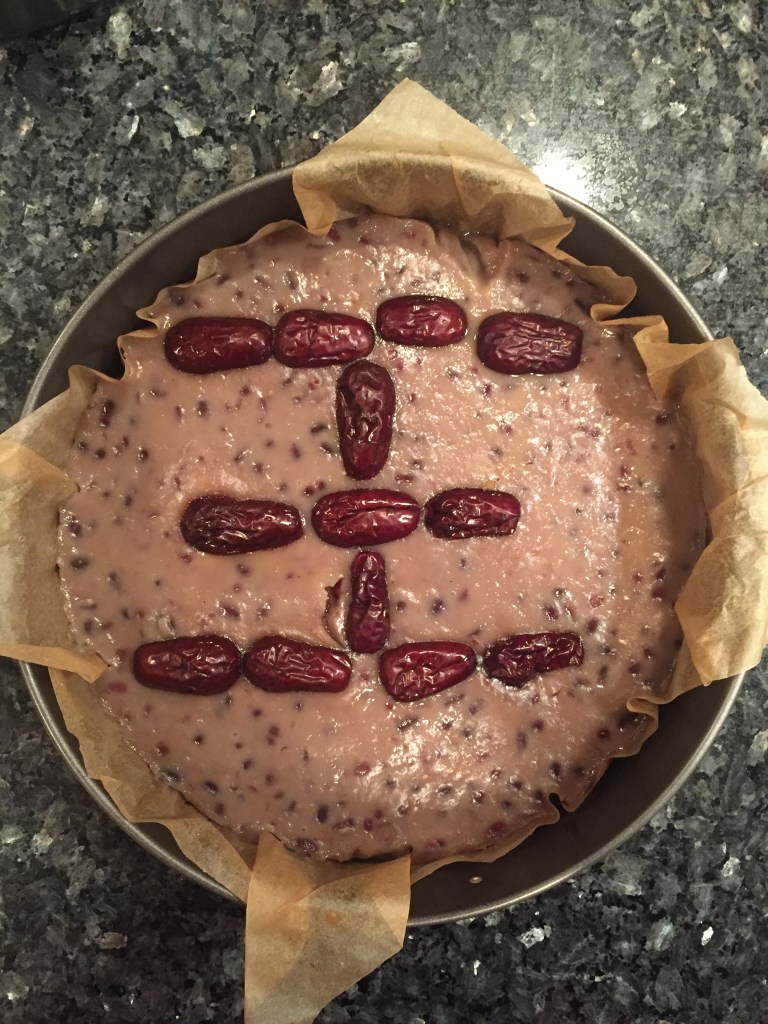
Optional: place dates on top for decoration.
Steam in boiling water for 45 minutes.
Remove to cool, and cut into slices to serve.
In the chance of any leftovers (highly unlikely), store in an airtight container for up to a week. Reheat in the microwave for 10 seconds.
I decided to put the Chinese character for “Wang”, our last name and a symbol for king.SteamingDelicious!
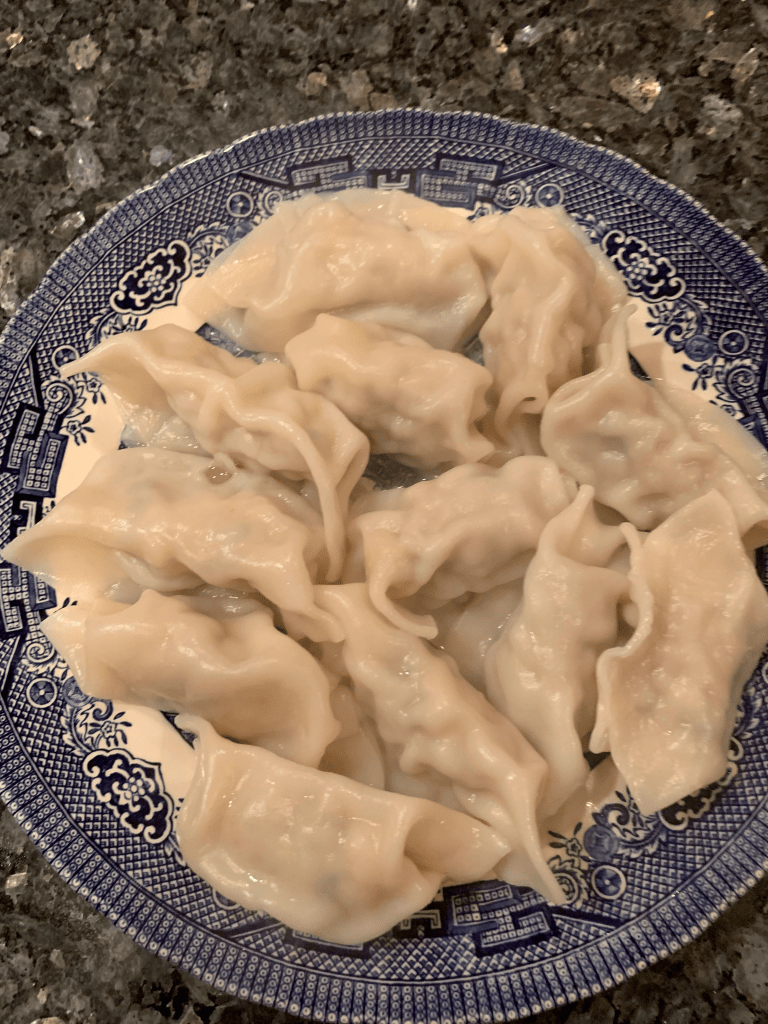
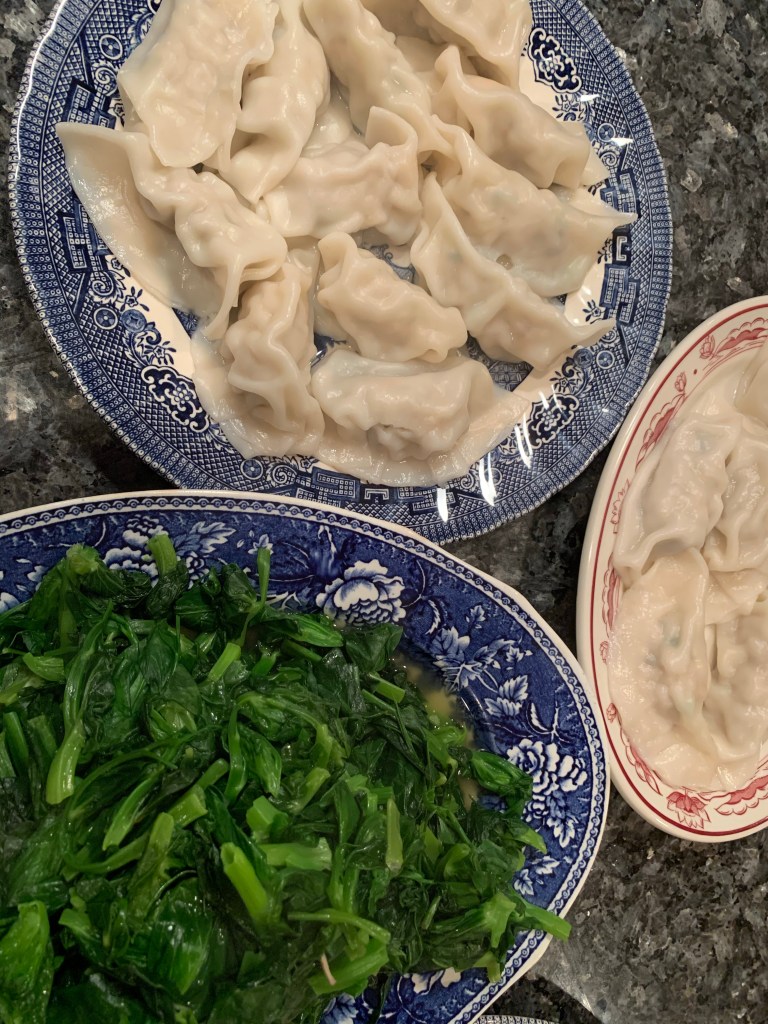
You can find Nai Nai wrapping dumpling skin on the floured counter during almost every Chinese holiday, or bagged dumps in the freezer as a go-to weekend lunch. What’s special about Jiao Zi isn’t just the various flavors, from pork and scallion to egg and chive, but the multitude of holidays in which they span. From Chinese New Year to the Winter Solstice, dumplings have sealed themselves more tightly to Chinese tradition than your grandma with her dumpling skin. And hopefully she won’t need to scold you along this recipe.
On the night Chinese medicine legend Zhang Zhongjing 张仲景 retired to his hometown, snowflakes encrusted his bulletin board beard. The cold wasn’t like any other type of winter night, it was the chill that penetrated your bones and tightened your invertebrate. After noticing that the villagers lacked thick winter clothes to protect their bodies, he shoveled through his case to find body-heating spices. He agonized at the rows of frozen ears, acknowledging that sympathy wasn’t his only responsibility: Zhongjing asked his disciples to set up a medical tent to feed the suffering. The disciples chopped up mutton, chili pepper, and cold-repelling medicines, wrapping the ingredients into curved shapes representing the townspeople’s ears. They then boiled the “ears” in a pot to make a kind of medicine called “cold-repelling and ear-correcting soup”. Steam climbing to the view of every villager’s windows, the suffering discovered warmth and kindness boiling under a small mobile tent. Zhongjing’s involuntary act of empathy thawed the pain of many. Later, people employed the cold-repelling “ears”, now called “dumplings”, to warm families during the Winter Solstice.
This recipe is a Wang family staple, pleasing both the picky grandpa and the health conscious older siblings.
Pork and Napa Cabbage Dumplings
Ingredients
1 lb. (450 grams) ground pork
1/2 lb. (250 grams) shrimp, peeled and deveined or ½ cup of dried baby shrimps sold in Chinese groceries
1 tablespoon grated ginger,
2 tablespoons soy sauce,
2 tablespoons Shaoxing wine (or dry sherry)
1 teaspoon sea salt
1/4 teaspoon white pepper
1 lb. (450 grams) Napa cabbage
4 green onions, finely chopped
2 tablespoons sesame oil
1 package dumpling wrappers
For the filling:
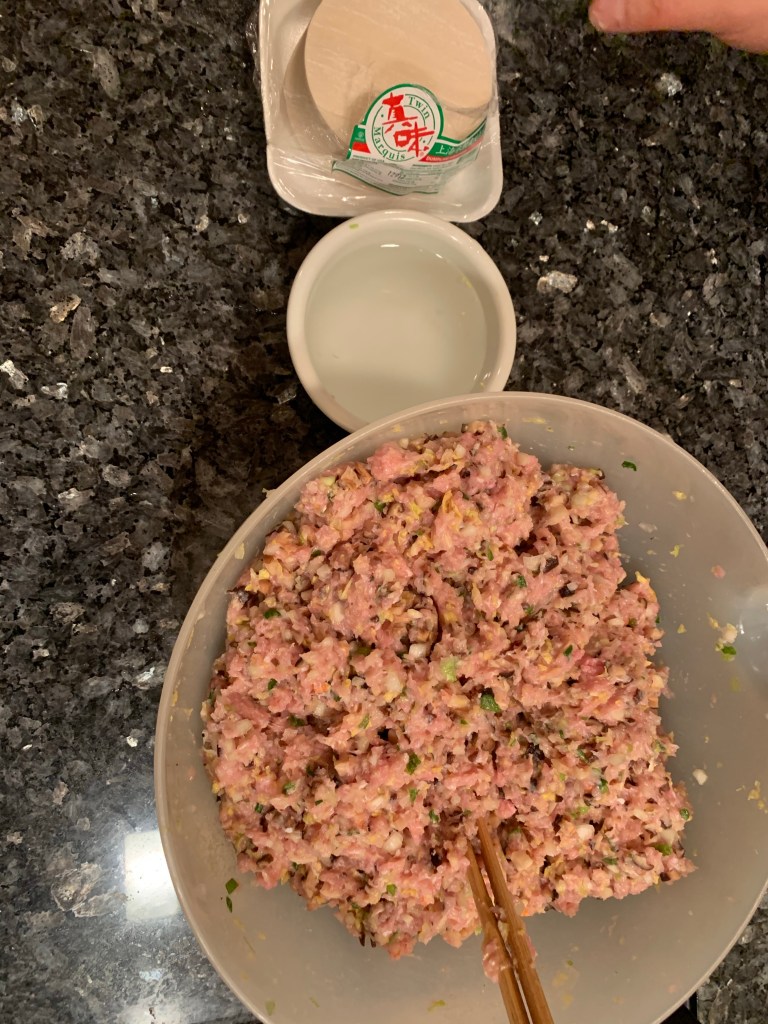
Combine ground pork, shrimp, ginger, soy sauce, Shaoxing wine, salt, and white pepper in a large bowl. Stir with a spatula until the ingredients are well combined and form a sticky paste. Thorough mixing is essential here so your dumpling filling will stay together when wrapping.
Cover with a plastic wrapper and allow to marinate in fridge until you’re ready to wrap the dumplings.
Cut the cabbage into small cubes and set aside.
Sprinkle 2 pinches of salt onto the cabbage and mix well with your hands. Allow this to sit for 10 to 15 minutes. Squeeze out extra water with hands.
Add the napa cabbage, green onion, and sesame oil into the pork mixture. Stir to mix well.
Ingredients line up
For the wrap:
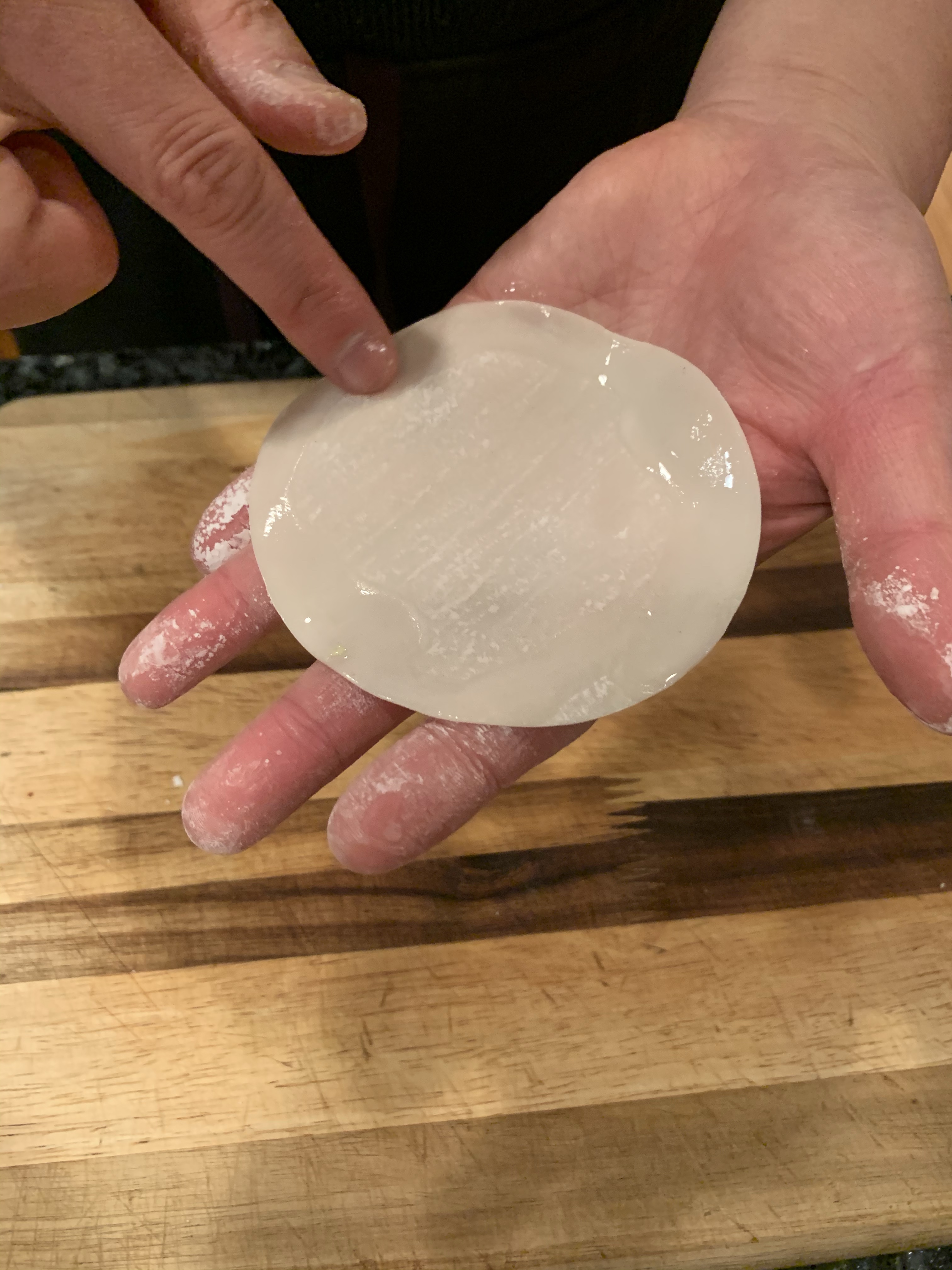
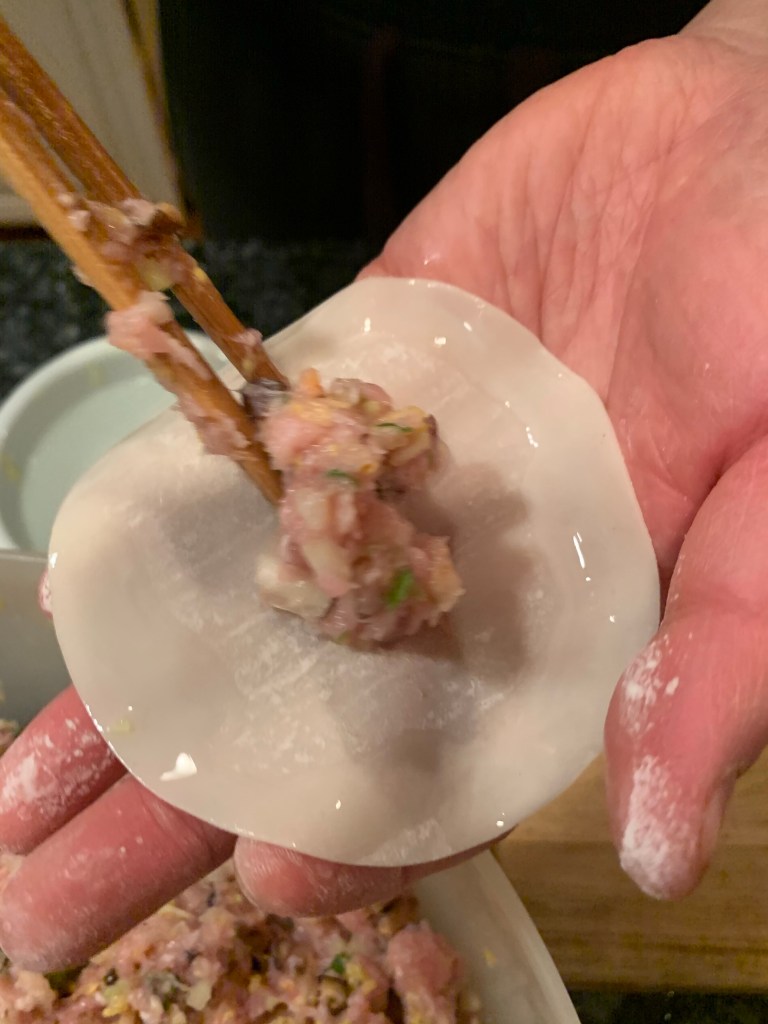
Scoop about 1 to 2 tablespoons of the filling and place it in the center of the wrapper.
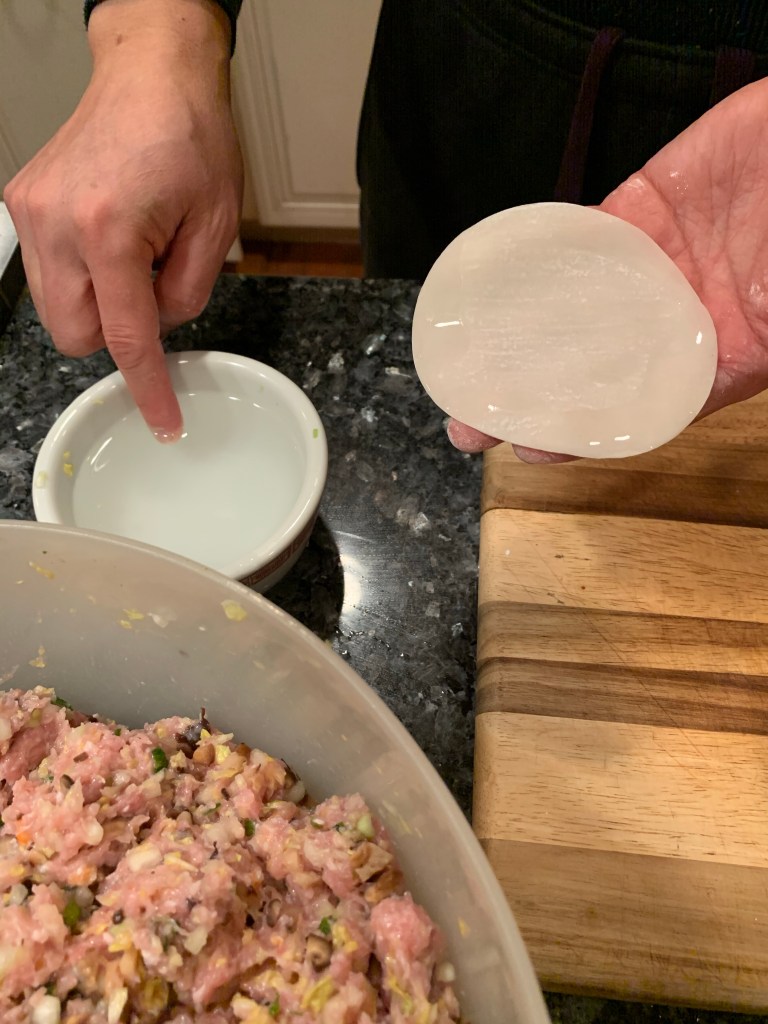
Dip your finger into a small bowl of water and wet the outer edge of the dumpling wrapper.
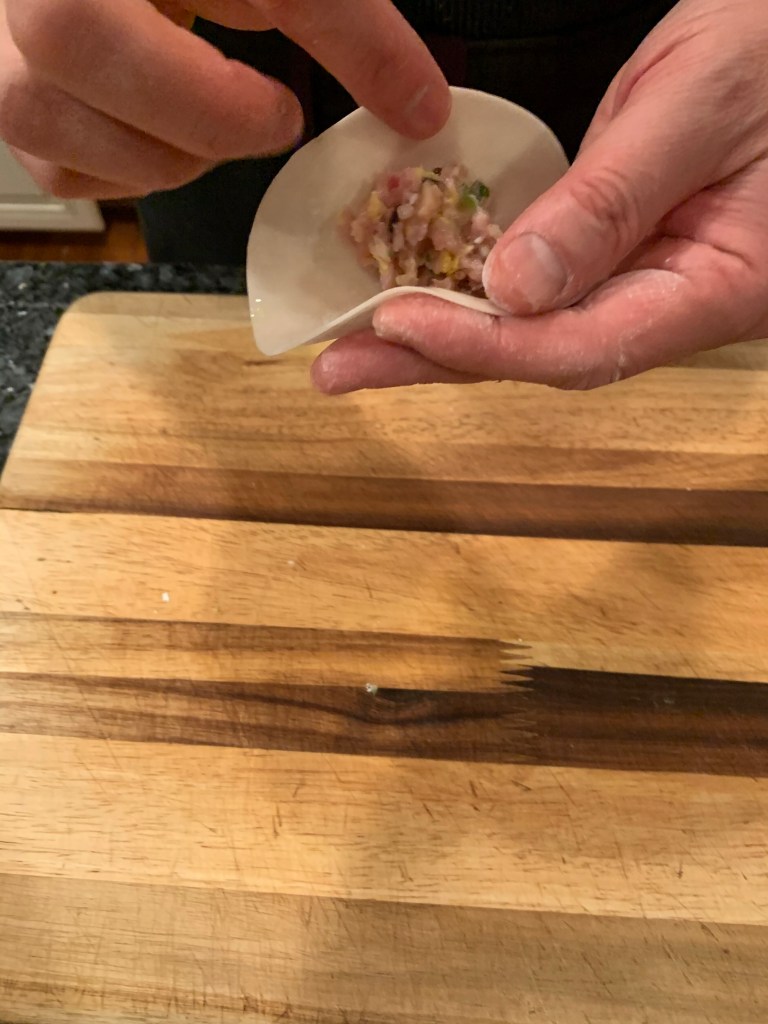
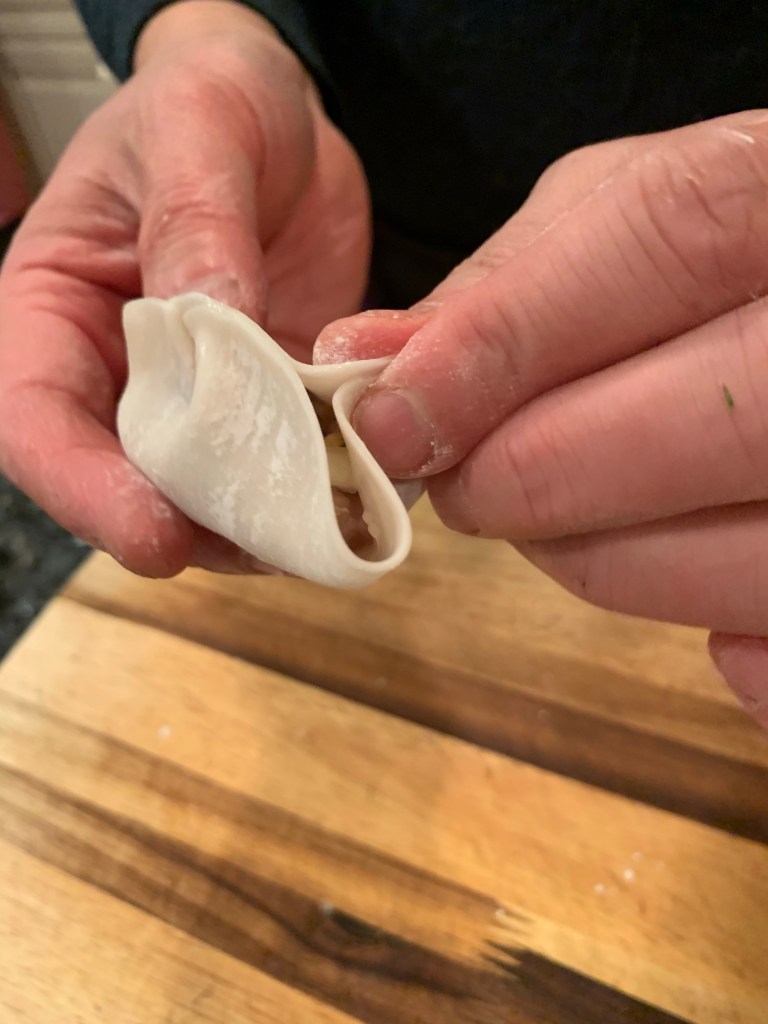
Fold both sides into a half-moon shape and pinch the middle points together.
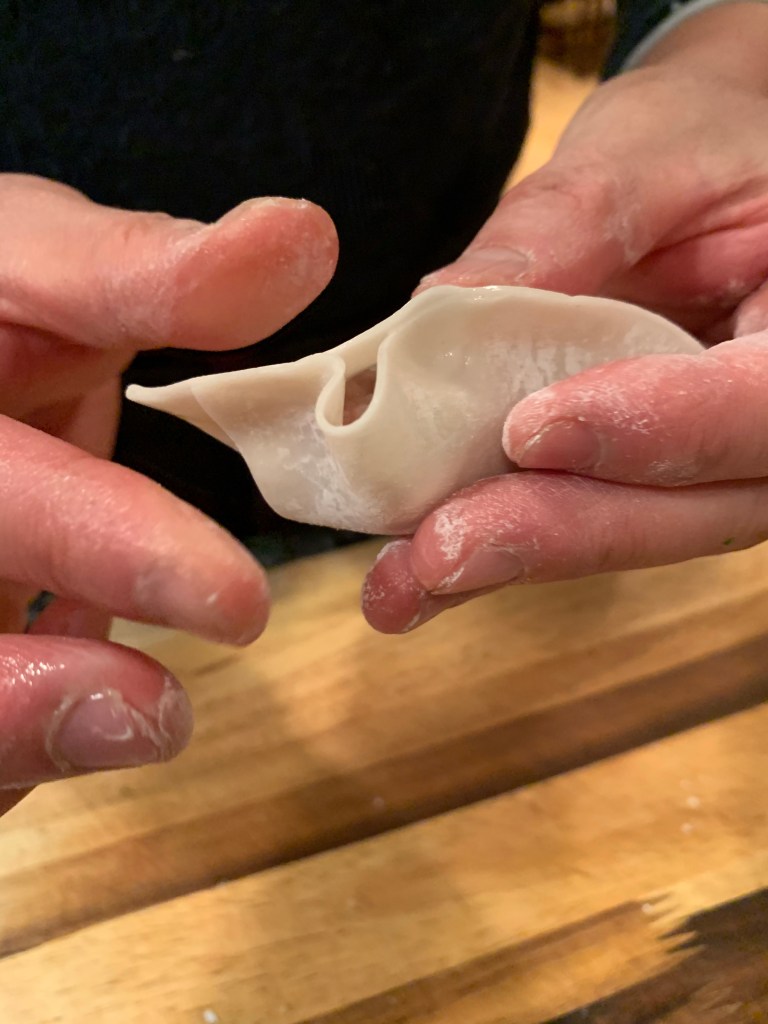
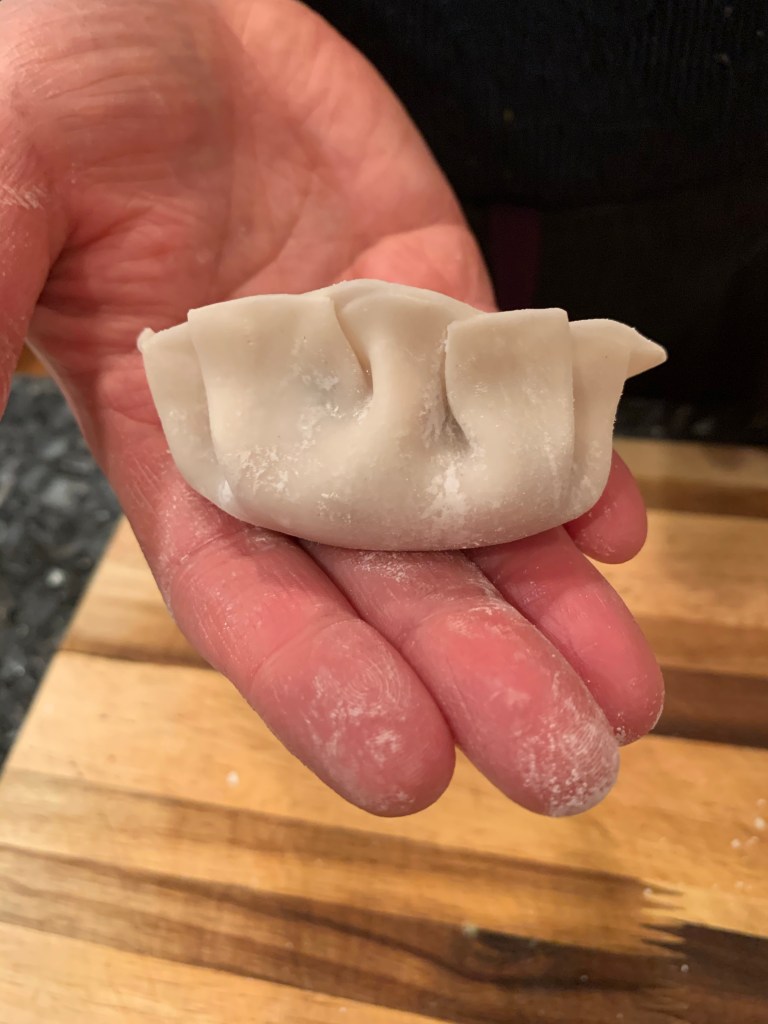
Hold the dumpling with one hand and start sealing the edges into pleats with the other hand.
Once you have sealed the dumpling, firmly press the pleated side with your fingers to make sure the dumpling is well sealed.
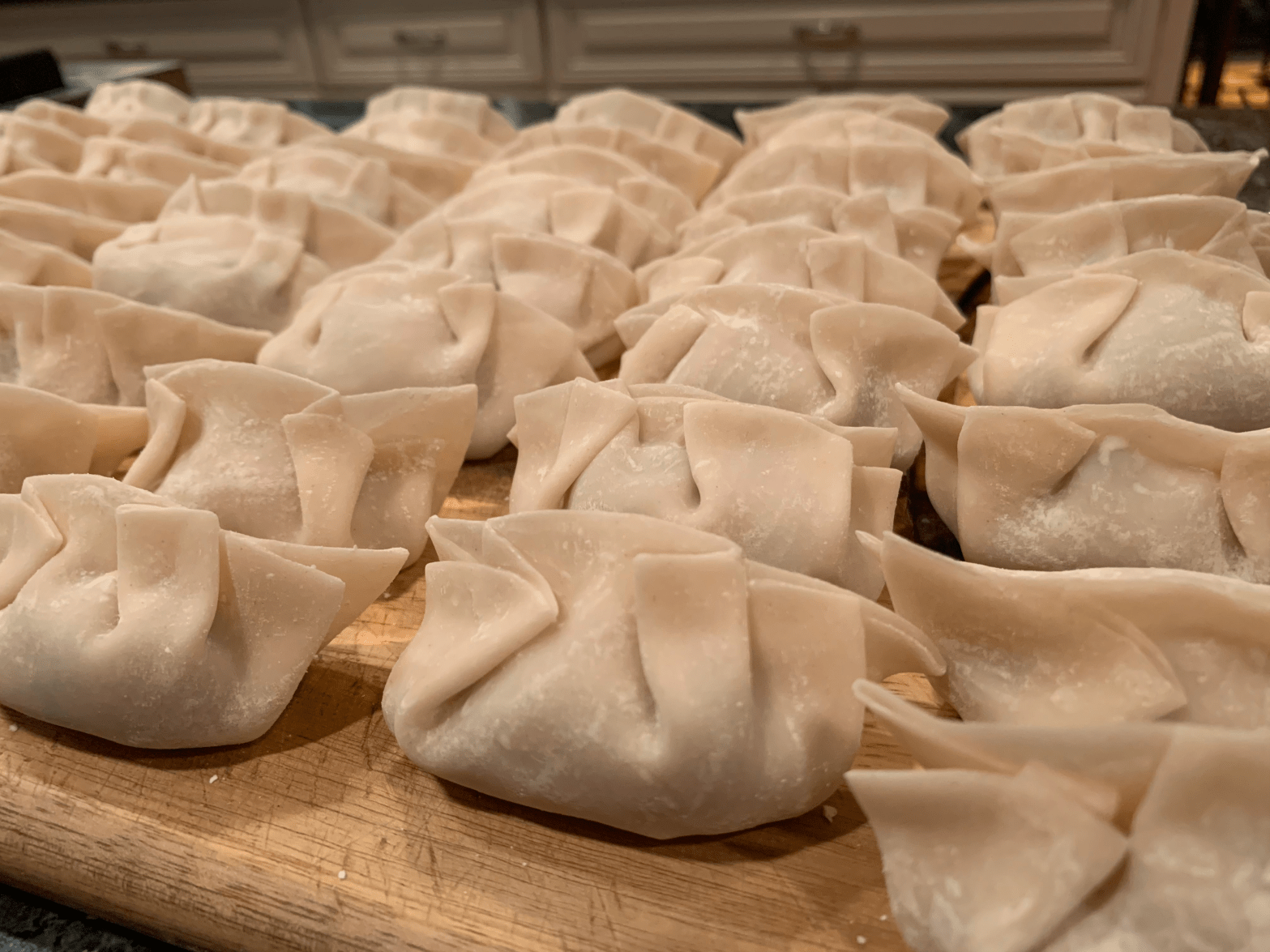
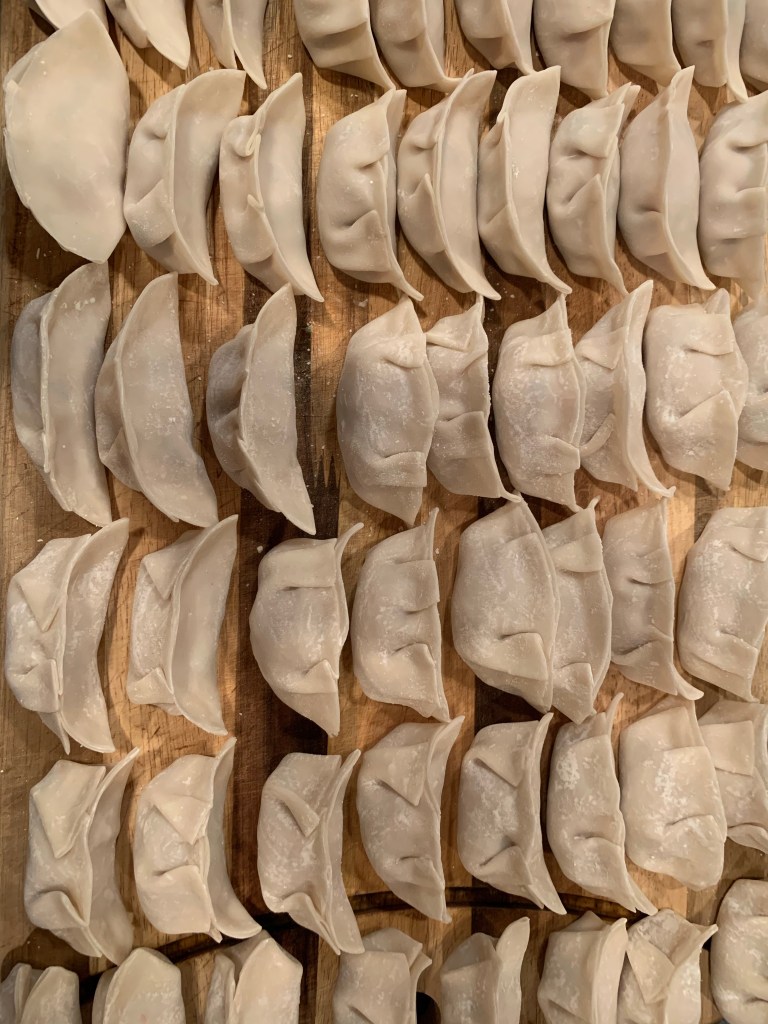
Place dumplings onto a well-floured cutting board.
Ring of waterFilling should not be too big nor smallPress both sides together and sealOne foldTwo foldTri-fold formationRepeat on other sideWhen these dumplings line up, they remind me of terracotta soldiers defending for battles in the mouth.
To cook
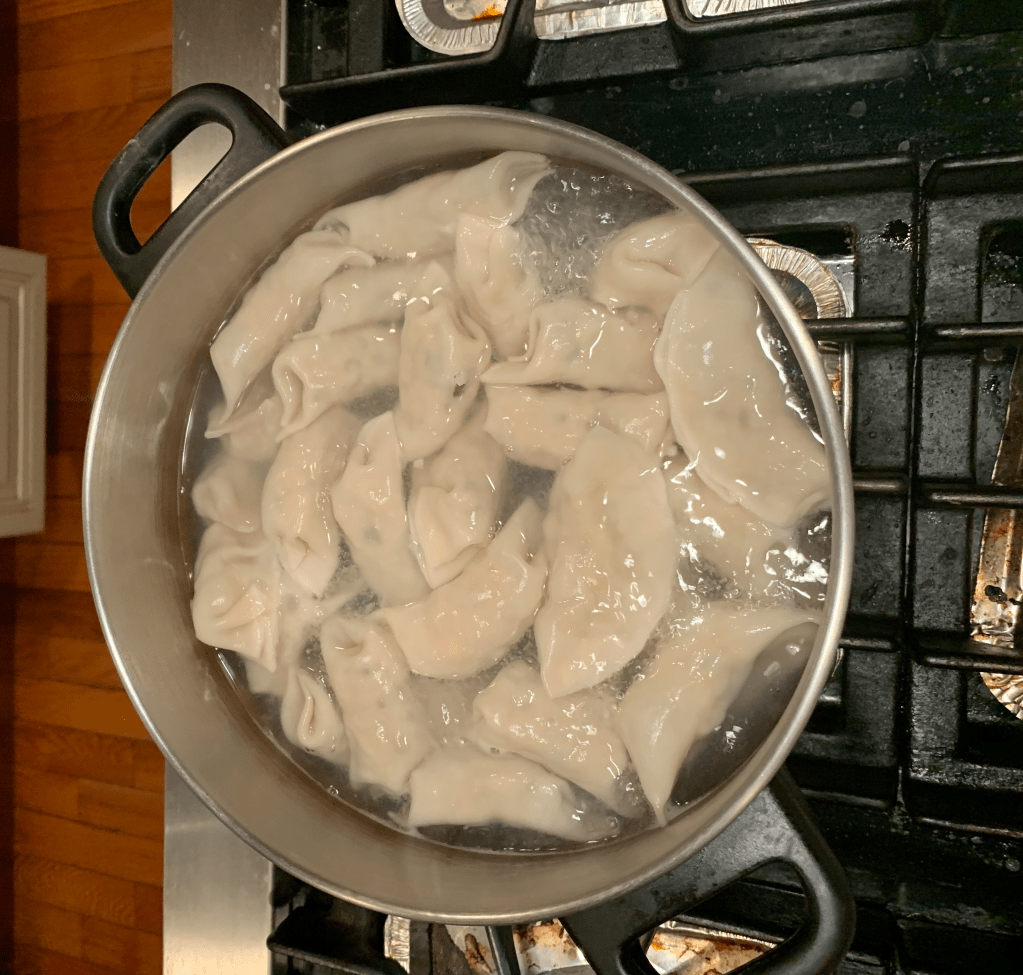
Bring a big pot of water to a boil.
Place 20 dumplings into the boiling water. Turn the flame to medium, continue cooking.
Stir the bottom of the pot occasionally to prevent sticking.
Once the dumplings float, add ½ cup cold water, bring it to boil, when the dumplings float again, add ½ cup water again. When the dumplings float, they are done.














 Holidays All Year Round